
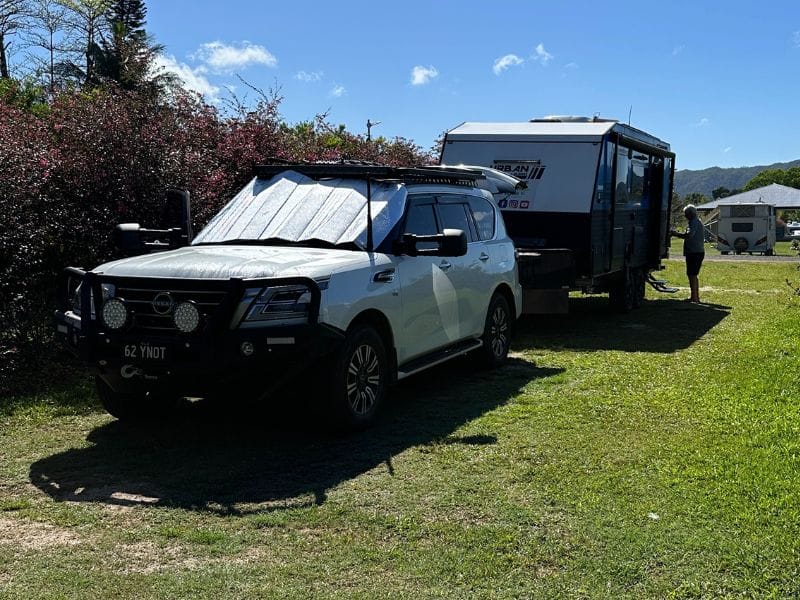
If you are new to caravanning, you may wonder what to check before towing a
Generally, I will do all the inside checks, and Kev will do all the outside checks for our
Imagine This…
You’ve packed the car. The
As you get up to speed, you hear a noise, and the car behind you starts tooting its horn and flashing its lights. You quickly pull over and jump out, wondering what on earth is wrong.
You look back down the road and see some debris lying on the roadway. With a feeling of dread, you realise that it is off your
You walk around the side and see that one of your windows has come away from the side of the van. You say angrily to your wife, “Didn’t you check that all the windows were closed?” She says, “No, I thought you did.”
What To Check Before Towing A Caravan
If the above were to happen, it would be a terrible feeling. But if you know what to check before towing a
Having a checklist you routinely go through before towing your van is a great way to ensure nothing is forgotten.
When your van is hooked up to your tow vehicle, take the time to do a final walkaround. You must do this whenever you are ready to hit the road. It needs to be the same procedure every time you move.
It will only vary if you find something else you should add. It is a habit you need to perfect, fine-tune and rely on.
This final check could save you time and money, possibly injury or inconvenience. As the years go by, people become complacent about what they do regularly. That is when things can get damaged, or people get hurt.
Damage Can Be Prevented
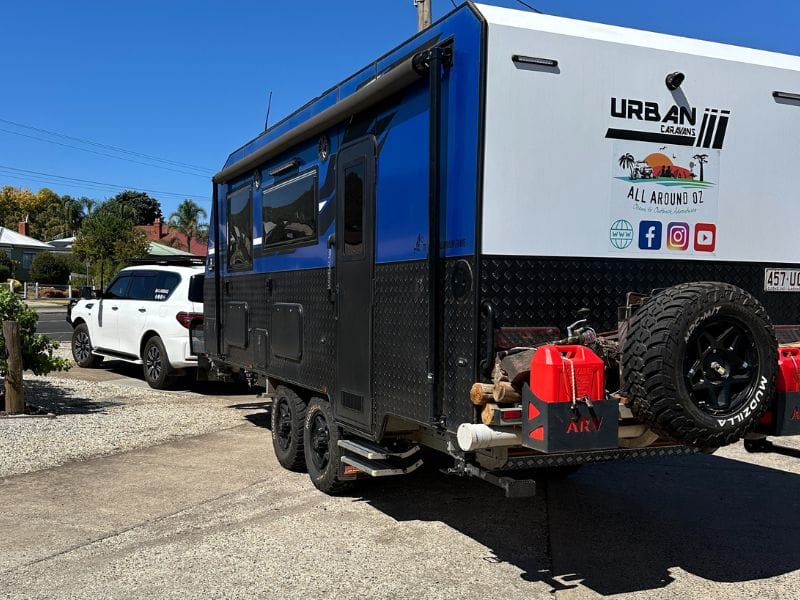
This is what Brenden has to say about damage prevention.
“With over 30 years on the road in heavy vehicles, I have seen things that should not have happened.
I have seen roof hatches flapping in the turbulence created above the van. Front window covers on vans that were not latched down have been ripped open and destroyed by passing trucks.
Side windows were open and flapping in the breeze, and safety chains were dragging on the bitumen surface. These things should have been noticed and corrected on the final walk-around. Damage to your van and pocket is preventable.”
Inside Caravan Checks
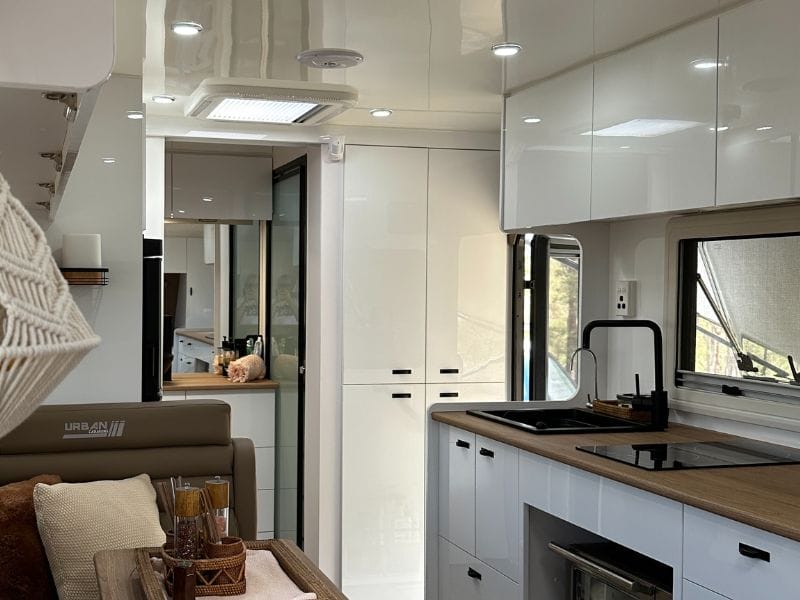
Before you even think about locking the door, you need to check everything inside is ready to travel. I routinely perform the inside checks. Starting at the opposite end of the door, which is the bed end in our van, these are the checks you need to perform.
- Doors and cupboards closed and latched – tug them to check
- The table in the travelling position
- Hatches are closed and secure
- Windows closed and latched
- Blinds and screens are secured in the open position
- TV secure
- The TV antenna is wound down
- The stove lid is closed
- Fridge doors latched
- The fridge switched from gas to electricity; if your fridge isn’t automatic
- The en-suite door is latched in an open position
- The shower screen door is latched closed
- The shower head is secure or resting on the ground – we lay it on a folded towel
- The slider between the toilet pan and cassette is in the closed position
- Check for loose items on benches, etc.
- The water pump is turned off.
- Any non-essential electrics are turned off.
This list is by no means exhaustive. Your list may vary a little or maybe a lot. When you are happy, it’s time to lock the door. Don’t feel silly if you double-check or even triple-check everything. I often do if I’ve missed checking something on a previous trip. It’s better to do this and feel confident you’ve missed nothing. The inside is ready to go.
Outside Checks Around The Van
Now it’s time to start your outside checks. As Kev is the driver, he usually does all the outside checks. Unless I am finished inside then I’ll check the lights are working and pull out our towing mirrors.
As you are performing your checks, make sure you are looking over the entirety of your van. You are checking for the following:-
- Power leads and hoses away
- Stabilizer legs raised and secure
- The jockey wheel off and secured
- All hatches are closed and latched
- Windows are closed and secured
- TV Antenna down
- Door locked
- The step is in travel position and secure
- Gas cylinders off
- Toolboxes and Generator box locked
- The down picnic table is secure
- All other external hatches are closed
- All lights are checked and functioning correctly
This will vary for your van as well.
Tow Vehicle Checks
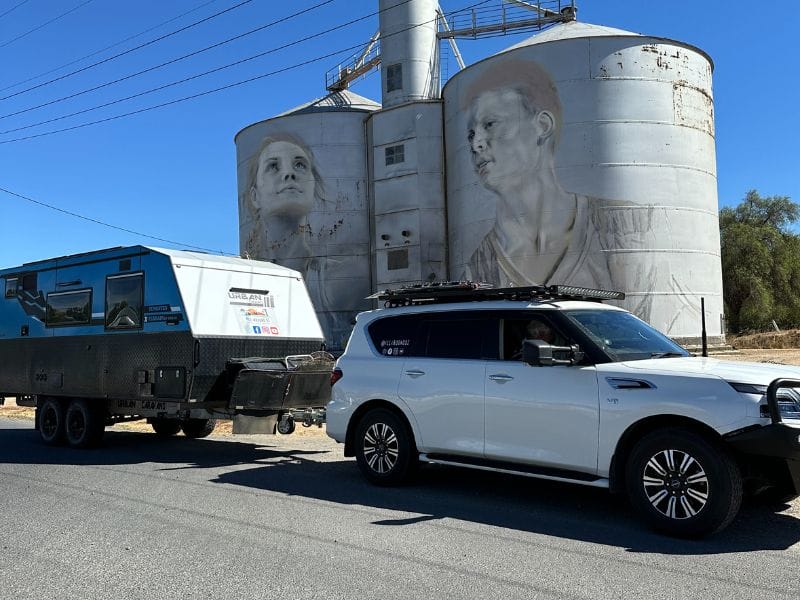
Don’t forget to take a walk around your tow vehicle as well.
- Tyres are inflated
- Lights are working
- Indicators are working
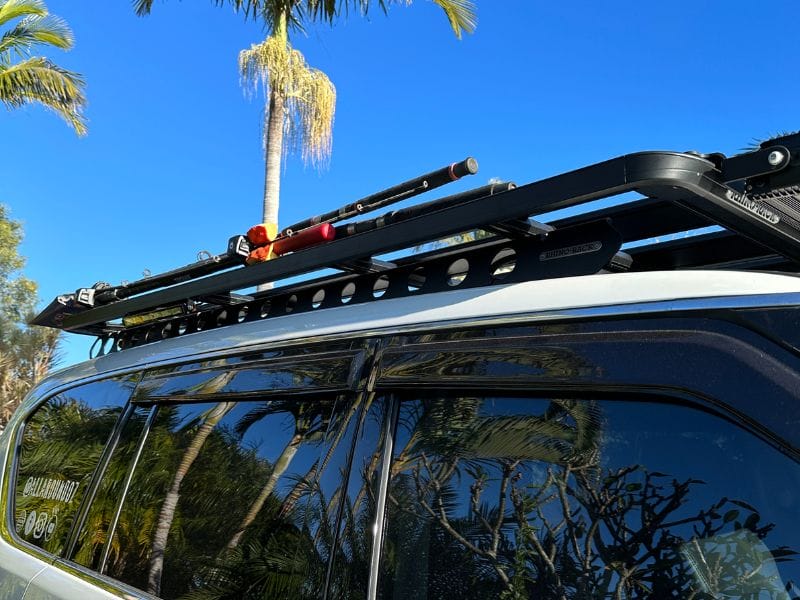
- Any items on the roof rack are secured firmly
- Canopy windows are closed and locked
Tow Coupling Check
This is the most critical check. No matter what coupling style you have, bad things can happen fast if it is not secure. You are checking the same things as you checked the last time.
- Is the coupling secure to the vehicle?
- Safety chains are secure, crossed, and short enough to prevent them from dragging on the road, but long enough to enable complete articulation from the hitch.
- Trailer lights plugged in and checked that all lights work
- Trailer park brake is released
- Anderson lead plugged in
- Trailer breakaway attached
- Jockey wheel off and secured or stored
Modify this to your needs, but ensure it is followed religiously every time.
One Last Check Before You Pull Away
All the jobs are done; let’s go! Before you drive away, activate the
30 Minute Check
A good habit to get into is just a quick walk around your van with your ears and eyes open each time you stop. You may find something that is not right before it causes an issue.
After 30 minutes of driving, some drivers will pull over and do a quick walk-around to check everything is ok.
This may all seem a bit long-winded now, but you will simplify and speed up the process. Your partner could do the inside while you do the outside, or vice versa. These procedures, modified to suit you, will save you time and money during your travels.
Pin This:

With years of experience travelling Australia in a caravan, I’m passionate about helping others embark on their own unforgettable adventures. From off-grid camping tips to expert advice on planning the ultimate big lap of Australia, I share stories, practical hacks, and inspiration to make your journey stress-free and exciting. Whether you’re a seasoned traveller or just starting out, join me as I explore the beauty of Australia, one road at a time!


Can you tell me why the shades have to be left in the open position. I thought if the window breaks the shades might protect the inside of the caravan
Hi Rhonda….most caravan blinds only clip together so there is not much holding them together. If you hit a bump they are likely to fly apart which will wreck the internal blind mechanisms. Far more likely to happen than a window breaking given that they are perspex and not glass.
Thanks a great tool for novices like us.
Cheers
Darrel and Donna
Glad you found it helpful.