

Wondering what to pack for a Big Lap Of Australia?
It can feel like you’re trying to fit your whole life into a caravan, and somehow there’s still no room for the things you actually use every day.
Kev and I have been on the road long enough now to know what earns its spot in the van and what ends up shoved under the bed for months “just in case”. And honestly, you probably don’t need three sets of mixing bowls, six towels each, or half of Kmart’s camping aisle.
The trick is not packing for every possible scenario. It’s packing for the way you’re actually going to travel.
Are you planning to free camp? Stay mostly in caravan parks? Travel remote roads? Work on the road? Take pets? Cook most meals yourself? These answers matter more than any generic packing list.
So if you’re getting ready for your lap, this guide will help you work out what’s worth taking, what you can leave behind, and what we’ve found genuinely useful after living and travelling in our caravan full-time.
What To Pack For A Big Lap Of Australia (Road-Tested Essentials)
The biggest packing mistake is trying to take everything you might possibly need.
After a while on the road, you quickly learn what you actually use and what just takes up space, adds weight, and gets moved from one cupboard to another every time you’re looking for something else.
Kev and I have refined our setup a lot since we first hit the road. Some things have earned a permanent spot in the van because we use them all the time. Other things seemed like a good idea at the time and barely saw daylight.
This list is based on what has been useful for real caravan travel around Australia, including free camping, long travel days, remote roads, cooking in the van, doing the washing on the road, staying connected, and trying to keep everyday life reasonably comfortable without overloading the van.
It’s not about packing the most. It’s about packing the right things for how you actually want to travel.
Before You Pack Everything, Think About Weight
Before you start filling every cupboard, remember that everything you pack adds weight.
It is easy to look at one extra appliance, another tub of clothes or a few extra tools and think it won’t matter. But it all adds up quickly, especially once you include water, food, gas, recovery gear, bikes, outdoor gear and everyday living items.
This is why packing light is not just about keeping the van tidy. It also affects towing, safety, fuel use and how easy your setup is to live with.
Pack what you know you’ll use, leave space to adjust, and weigh your setup properly before you head off.
Comfort Is King: Bedding & Sleep Gear
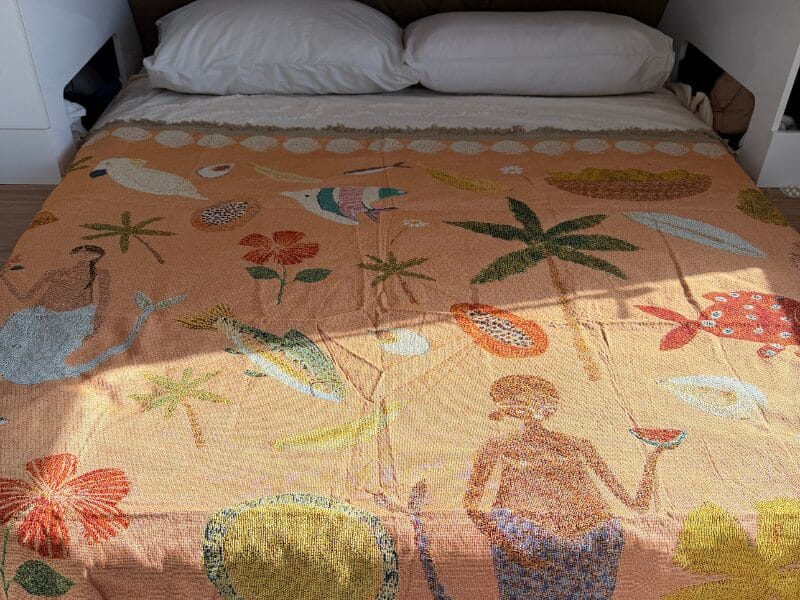
Do not underestimate sleep on the road.
A bad night’s sleep makes everything harder. Driving days feel longer, small annoyances turn into bigger ones, and suddenly the whole trip feels less fun than it should.
These are the basics I’d make room for:
- Two sets of good-quality sheets
- A caravan mattress topper or upgraded caravan mattress
- Pillows you actually like, these our our favourites
- A doona and doona cover
- Extra blanket/throw rug for cold nights or unexpected weather changes
Two sets of sheets are worth having because laundry days do not always line up neatly with your plans. Sometimes it’s raining, sometimes the caravan park machines or washing lines are full, and sometimes you just cannot be bothered dealing with washing that day.
If your caravan mattress is ordinary, sort it before you go. A caravan mattress topper can make a big difference, but if the mattress is truly terrible, replacing it may be one of the best comfort upgrades you make.
Road-tested tip: when your doona is not being used, store it flat under your mattress protector or topper. It keeps it out of the way without taking up precious cupboard space.
Download Your Free Big Lap Packing Checklist
Want the quick version to tick off as you pack?
Pop your details below and I’ll send you the checklist.
Kitchen Gear You’ll Actually Use

Your caravan kitchen does not need to look like your kitchen at home.
We started with more than we needed because it’s easy to think you’ll be cooking all the things, all the time. But on the road, the best kitchen gear is the stuff that is easy to use, easy to clean, and easy to store.
Simple meals, one-pan dinners, leftovers, lunches on travel days and coffee that keeps everyone civil. That’s the real caravan kitchen.
These are the things that get used the most:
- One good frying pan
- One small saucepan with a lid
- One larger pot or saucepan
- Collapsible mixing bowl and strainer
- Nesting containers for leftovers
- Dish drainer that folds flat
- Coffee setup that suits how you actually drink coffee
- Sharp knife, peeler, tongs and one wooden spoon
- Chopping board that fits your bench space
You don’t need a full dinner set for eight, three chopping boards, every gadget from home, or anything packed because “maybe we’ll use it one day”.
If you have not used it at home in the last six months, there’s a fair chance it won’t suddenly become essential once you’re living in a caravan.
Tools & Maintenance Must-Haves

Even if your caravan and vehicle are well set up, things will still rattle loose, stop working, leak, crack, snap or need tightening at the worst possible time.
You do not need to carry a full workshop, but you do need enough basic gear to handle the small fixes that happen on the road.
These are the kinds of things worth having:
- Basic toolkit with screwdrivers, hammer, spanners and tape measure
- Multi-tool or Leatherman
- Spare fuses
- Hose washers
- Spare light bulbs
- Duct tape and electrical tape
- Water filter
- Spare hose fittings
- Cable ties
- Gloves
- Tyre pressure gauge
- Air compressor
- Basic tyre repair kit, if you know how to use it
A basic toolkit can turn a small problem into a quick fix instead of a ruined travel day.
And yes, duct tape, electrical tape and cable ties will probably earn their keep more often than you expect.
Personal Comfort & Hygiene
You do not need to pack your entire bathroom cupboard, but you do need the basics that help you feel clean, comfortable and a bit more human on the road.
Dust, dirt, sweat, communal showers, limited water and a few days off-grid can make the little things matter more than you expect.
These are the things worth having:
- Quick-dry towels, ideally two per person
- Microfibre cleaning cloths
- Properly stocked first aid kit
- Wet wipes or body wipes
- Thongs for communal showers
- Basic toiletries you actually use
- Sunscreen
- Insect repellent
- Hand sanitiser
- Small toiletry bag for caravan park showers
- Laundry bag or basket
A small shower bag is handy if you use caravan park amenities. Keep your shampoo, conditioner, body wash, razor and thongs together so you are not rummaging through cupboards every time you want a shower.
And don’t skimp on the first aid kit. Make sure it is properly stocked before you leave, then check it every so often as things get used or expire.
Clothing: Pack Light, Layer Smart

It is very easy to overpack clothes for a Big Lap.
You start thinking about every possible weather situation, then suddenly you’ve packed for summer, winter, a wedding, a hike, a cold snap, a heatwave and a nice dinner you may never actually go to.
The reality is, you’ll probably wear the same favourites over and over again.
The trick is to pack clothes that are comfortable, easy to wash, quick to dry and simple to layer. You do not need a huge wardrobe. You just need clothes that work for hot days, cool nights, travel days, walking, washing day and the odd time you want to look slightly less like you’ve been living in a caravan amidst the red dirt.
A practical starting point is:
- 5 to 7 tops per person, with a mix of short and long sleeves
- 3 to 4 bottoms, such as shorts, pants or leggings
- One warm layer, such as a fleece or jumper
- One puffer jacket or warmer jacket for cold areas
- Raincoat or waterproof shell
- Comfortable walking shoes or boots
- Socks and underwear
- Thongs
- One pair of decent shoes
- Swimwear
- Hat and sunglasses
Think layers, not bulk. A few good pieces you can mix and match will be far more useful than a cupboard full of clothes you keep moving around but never wear.
Road-tested tip: if you do not wear it at home, there’s a good chance you won’t wear it on the road either.
Tech & Connectivity

Staying connected on the road depends on how you travel.
If you’re only checking the weather, messaging family and booking the odd campsite, your setup might be fairly simple. But if you work online like I do, internet becomes a lot more important.
I use it to keep this website running, manage our Facebook groups, upload content, answer emails and keep everything ticking along while we’re travelling. Oh, and Kev can watch the footy. For us, Starlink has made a huge difference and I wouldn’t want to be without it now.
That said, it’s still worth having more than one option. Coverage changes from place to place, and remote areas are not where you want to rely on one single thing working perfectly.
Useful tech to consider:
- Phone and backup charging cable
- Starlink, if you need reliable internet for work or regular online access
- Telstra data SIM or plan for mobile coverage
- Power banks for travel days and off-grid stops
- Laptop or tablet if you work online or stream on the road
- GPS or maps app
- WikiCamps or your preferred camping app
- Downloaded offline maps before remote sections
- Spare charging leads
- 12V chargers for the car and van
If you rely on the internet for work, check your options before you leave and make sure you understand your data plans, coverage and power needs.
For us, Starlink is essential because of the business. But if you’re not working online, you may not need the same setup. Pack the tech that suits how you’ll actually travel, not what everyone else says you must have.
Other Essentials

These are the bits and pieces that do not always feel important when you’re packing, but they can make a big difference once you’re actually living on the road.
A comfortable outdoor setup matters because you’ll spend a lot of time outside the van. Shade, somewhere decent to sit, somewhere to put your cuppa, and a way to keep the dirt from being walked straight inside all make day-to-day travel easier.
A few extras worth packing:
- Camp chairs you actually find comfortable
- A lightweight compact table
- Outdoor mat for under your awning
- Cgear mats or Muk Mats, both of which we use
- Fly nets, especially if you’re heading anywhere with flies or mozzies
- Pegless clothesline
- Head torches and a handheld torch
- Travel diary or journal
The travel diary might seem old-school, but it is a good one. You think you’ll remember the little places, funny moments, great camps and random roadside stops, but after a while they all start to blur together.
What to Leave Behind (You’ll Thank Us Later)
It is very easy to pack things because you might need them one day.
But space and weight matter, and the things you do not use become annoying pretty quickly. They rattle around, get in the way, take up cupboard space and make it harder to find the things you actually need.
These are the kinds of things I’d think twice about packing:
- Multiple sets of the same thing
- Full-size ironing board and iron
- Appliances you do not use at home
- Too many glasses, mugs or plates
- Fragile decor that will rattle, shift or break
- Too many shoes
- Extra bedding you are unlikely to use
- Big serving dishes or kitchen gadgets
- Anything packed only because “we might need it one day”
If you do not use it at home, be honest about whether you’ll really use it in the van.
There are always exceptions, of course. But most of the time, less really does make life easier on the road.
Final Thoughts
Packing for a Big Lap is not about getting it perfect.
You’ll probably take a few things you never use, and you’ll probably realise a few things would have made life easier if you’d packed them from the start. That’s pretty normal.
The main thing is to pack for how you actually plan to travel. Not how someone else travels, not what every Facebook thread says you need, and definitely not for every possible “just in case” situation.
Think about your setup, your storage, your weight, your budget, where you want to camp, how often you’ll cook, whether you’ll be working on the road, and how much comfort you need to enjoy the trip.
Start with the essentials, leave room to adjust, and remember you can usually buy things along the way if you really need them.
Already done your lap? What did you pack that turned out to be brilliant, or a complete waste of space?
Still planning? Pop your questions in the comments below. Let’s help each other out.
Pin This

With years of experience travelling Australia in a caravan, I’m passionate about helping others embark on their own unforgettable adventures. From off-grid camping tips to expert advice on planning the ultimate big lap of Australia, I share stories, practical hacks, and inspiration to make your journey stress-free and exciting. Whether you’re a seasoned traveller or just starting out, join me as I explore the beauty of Australia, one road at a time!




Hi Annette
Thank you for the tips on what to pack for the big lap we’re planning on doing it in 3 more years , so it’s nice to be able to do a check list on what to pack for sometimes we over pack and don’t use what we bought along for the trip
Thanks again
Hi Sandie
You are welcome!
Happy travels
Annette
Our caravanning days are over but most of our clothes were the no need iron type except for my husband who was the need ironing shorts type! I found the Camps book a marvelous iron. Folded shorts neatly, placed on the bed with Camps book on top, I dont remember how long I left them, probably at least a couple hours and then turned them over.
Love it! Ironing without ironing!
I have absolute minimum in my tiny van.
I try to take things that have at least 2 uses.
Also don’t cater for ‘visitors’, eg extra crockery & cutlery. If they’re on̈ the road too, they will have their own.
Hi Annette, thanks for your site, it’s so useful & easy to read 🙂 We’re just starting our plans for a 6 month lap. Wish we could take longer…maybe next time.
Anyway, we’ve done quite a few shorter van adventures and absolutely loved it. I just wanted to leave a comment, which might be helpful for overseas travellers less familiar with Aussie life – with all of the packing list make sure to visit all the local Op Shops (Charity Shops) in each small town. We have always bought nearly all our basic kit from these stores and donated what we can back when our journey was over. The volunteers are always lovely and will send you to the best pie shops, coffee shops and pubs, as well as other bits of local knowledge if you’re lucky.
Thanks again for all the resources you provide.