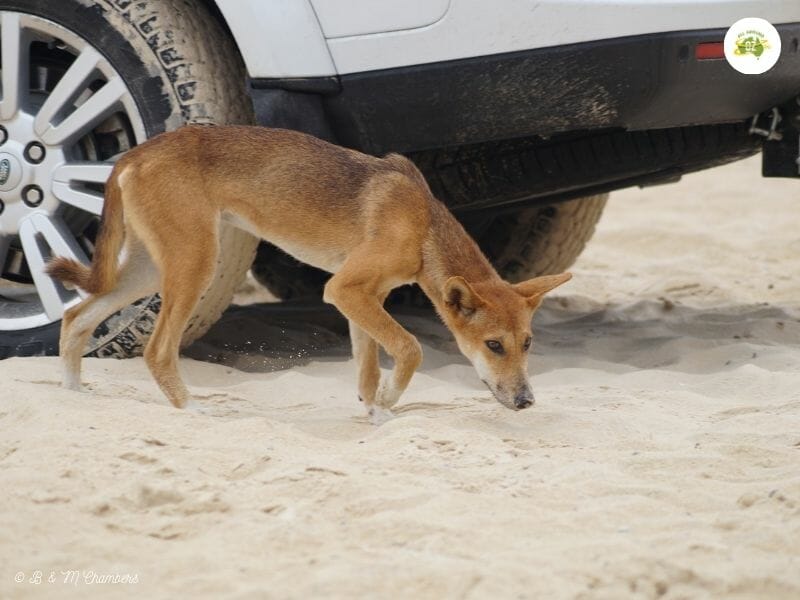
If you are visiting Fraser Island, one thing you need to be aware of is the high number of dingoes that inhabit the island. It is such a thrill to see our native dogs in their natural habitat. But, it must never be forgotten that all dingoes on Fraser Island are wild animals. To minimise the chance of negative interaction, these dingo safety tips will help ensure you and your family remain safe.
DINGO SAFETY
Dingoes on Fraser Island, and in many parts of mainland Australia, are protected by law. Fraser Island dingoes are possibly one of the purest strains of dingo in Australia. They have rarely bred with domestic dogs, unlike dingoes in so many other parts of Australia.
There have been several attacks on humans, particularly children, in recent years. At least one of these attacks sadly resulted in the death of a child. Therefore, following a few simple rules when dingoes are around or expected to be around will keep everyone safe.

FOOD AND DINGOES
- DO NOT FEED dingoes. This is an offence. Dingoes are naturally lean animals. Many people feel sorry for them and feed them. But this causes them to lose their natural hunting skills and also for them to come closer to campsites and people looking for food.
- If camping or picnicking, keep food off the ground and secure. In many locations on Fraser Island, you can only picnic in fenced areas. Adhere to all warnings and advisory signs.
- When leaving your campsite, ensure all your food is secured in tubs and eskies that a dingo would not be able to open.
- Remove all food scraps and rubbish and take them with you or place them in the bins provided. There have even been reports of dingoes taking tea towels and dishcloths so put these away securely as well. Do not hang rubbish bags from trees or tent poles.
- If you are fishing, make sure you keep your bait and fish in a secure container and do not dispose of fish scraps within one kilometre on either side of designated camping areas.

INTERACTION WITH DINGOES
- Do not attempt to pat the dingoes. Stay at a safe distance.
- Keep small children and even small teenagers close to you at all times. If camping, consider camping in one of the fenced campgrounds.
- Do not go walking alone. Always walk in a group or consider taking a stick with you to defend yourself if you are attacked.
- If you feel threatened by a dingo, stand still and call confidently for help and calmly back away.
- Be aware that dingo behaviour may become more aggressive in Autumn and Summer as these are the times of the year when they are mating and having pups.
- Be careful when driving along the beach. Always keep an eye out for dingoes. We saw several wandering on the beach and laying in the sand. The dingoes we saw appeared to be used to vehicles and were in no hurry to move away.
Follow these few simple rules and you should not have an issue with any dingo on Fraser Island.

WHAT TO DO IF BITTEN
If you are unfortunate enough to be bitten you should seek medical attention straight away. The incident should be reported to a Parks and Wildlife Ranger. Take note of your location during the attack as the ranger will want to know what area you were in.
We were lucky to see a number of dingoes when we were on Fraser Island and these dingo safety tips helped us to do the right thing when they were nearby.

Listen in to their podcast episode https://allaroundoz.com.au/podcasts/travelling-and-working-around-australia/