
After everything that happened on the Gibb River Road, arriving in Kununurra was a relief. We’d been dealing with ongoing caravan power problems, a flat tyre on the Patrol and a damaged water tank fitting, so we were more than ready to spend a few days somewhere we could get things sorted.
We also had plenty we wanted to see around Kununurra, including Mirima National Park, Ivanhoe Crossing and Lake Argyle. We hadn’t come all this way just to spend our time organising repairs!
What was originally going to be a relatively short stop turned into ten nights across two caravan parks. And while we managed to get quite a few things done, the biggest problem of all, our caravan’s electrical system, was still proving difficult to diagnose.
Ten Nights in Kununurra After the Gibb River Road
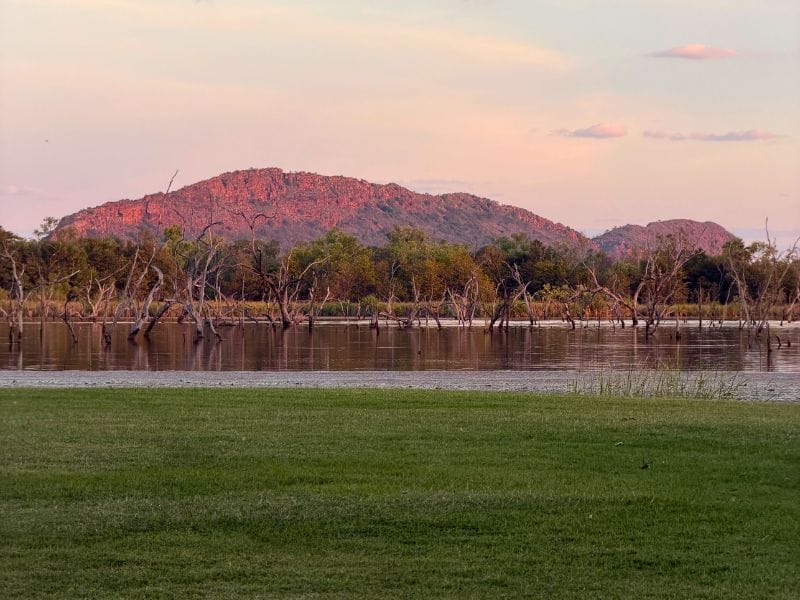
Our first five nights were at Kimberleyland Waterfront Holiday Park, where we booked a powered site with water for $55 per night with our G’day membership discount.
After several nights off-grid on the Gibb, having access to power again was very welcome. We could finally stop worrying quite so much about what the batteries were doing overnight and concentrate on everything else that needed attention.
Those first few days were busy. We had to replace the Patrol’s damaged tyre, organise a replacement fitting for the caravan’s water tank and arrange for someone to inspect the caravan’s electrical system. There were bookings to make and other jobs to catch up on, with a weekend falling in the middle of our stay.
We also wanted time to explore the area rather than spend our entire visit running around town.
We ended up staying five nights at Kimberleyland before moving to Hidden Valley Caravan Park for another five nights.
Kimberleyland vs Hidden Valley Caravan Park
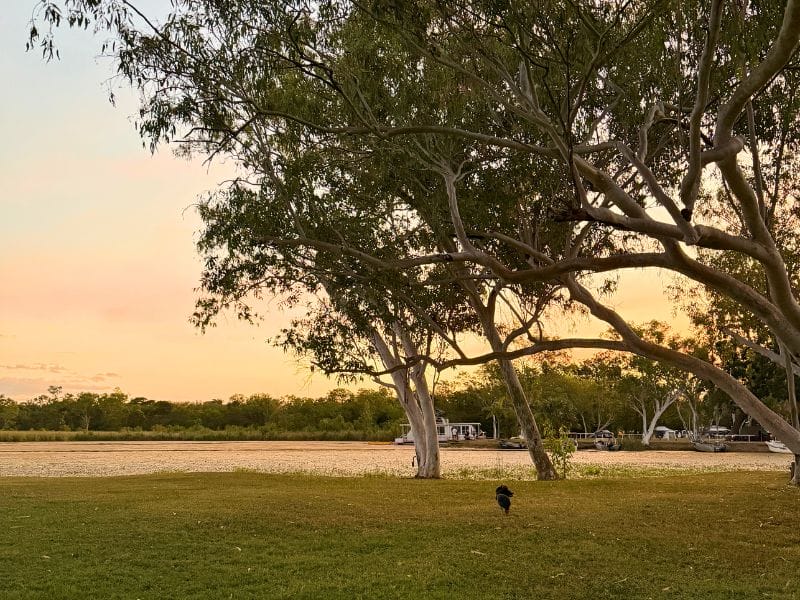
Having stayed at both parks, we definitely preferred Kimberleyland.
The setting was nicer, and we thought the facilities were better. It was a lovely place to spend a few days, particularly after the challenges we’d experienced on the Gibb.
But there was a substantial difference in price.
We paid $55 per night at Kimberleyland for a powered site with water. At Hidden Valley, our initial rate was just $28 per night because the park was quiet.
That cheaper rate didn’t last throughout our stay, though. As the park became busier, and with different weekend rates applying, the price increased.
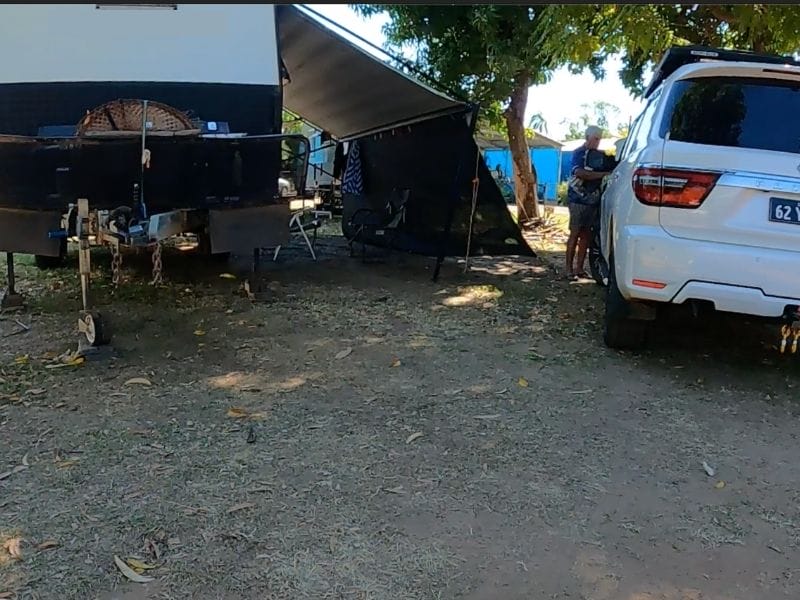
Those were the prices we encountered in June 2026, not necessarily what either park charges now.
If we were choosing purely on the experience, Kimberleyland would be our pick. But when you’re staying somewhere for ten nights, the difference in accommodation costs can add up fairly quickly.
Getting Our Caravan Power System Inspected
We’d booked the caravan into JK Adventure Co in Kununurra for an electrical inspection on the same day we were moving from Kimberleyland to Hidden Valley.
Initially, we weren’t sure how long they’d need the caravan, so we’d allowed some flexibility. We thought we’d stay overnight, collect the van when it was ready and perhaps spend another day exploring Mirima National Park before continuing our trip.
Unfortunately, the inspection didn’t give us the straightforward answer we’d been hoping for.
What the Electrical Inspection Found
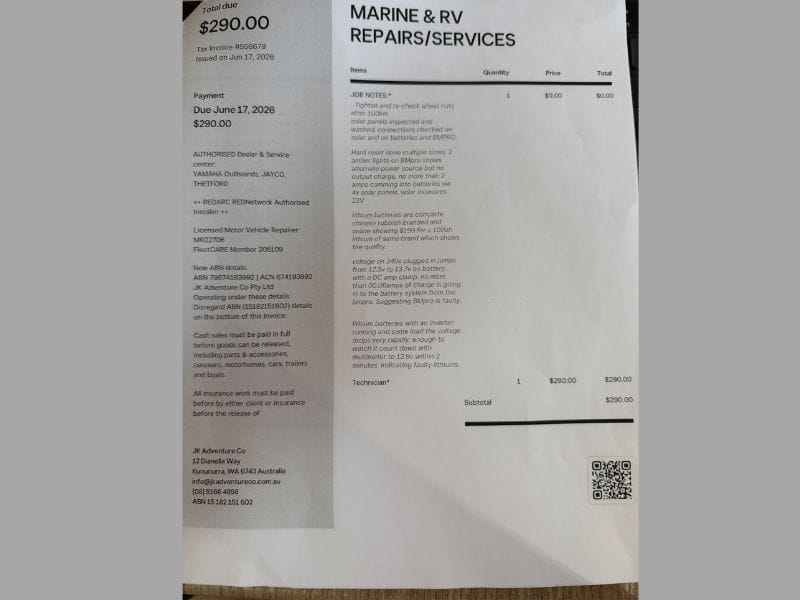
The technicians checked the solar panels and connections, inspected the battery system and carried out several resets while trying to identify why we were getting so little charge.
Despite the solar panels showing voltage, very little charging current appeared to be reaching the batteries.
The technician suspected there might be a problem with the BMPro system and also raised concerns about the lithium batteries because of the way their voltage was dropping under load.
We paid $290 for the inspection, but the findings weren’t a confirmed diagnosis. The necessary replacement parts weren’t available locally, either, so there was no immediate fix.
To complicate matters further, Urban Caravans didn’t agree with the technician’s assessment.
We subsequently arranged to have Urban and their troubleshooter auto electrician inspect the system together when we caught up in early August for Urban Caravans social get-together.
At that point in Kununurra, though, we still didn’t have a definitive answer about what was going wrong.
After all the trouble we’d experienced at Silent Grove, Manning Gorge and Mt Elizabeth, it was incredibly frustrating.
Taking Some Time to Explore Mirima National Park
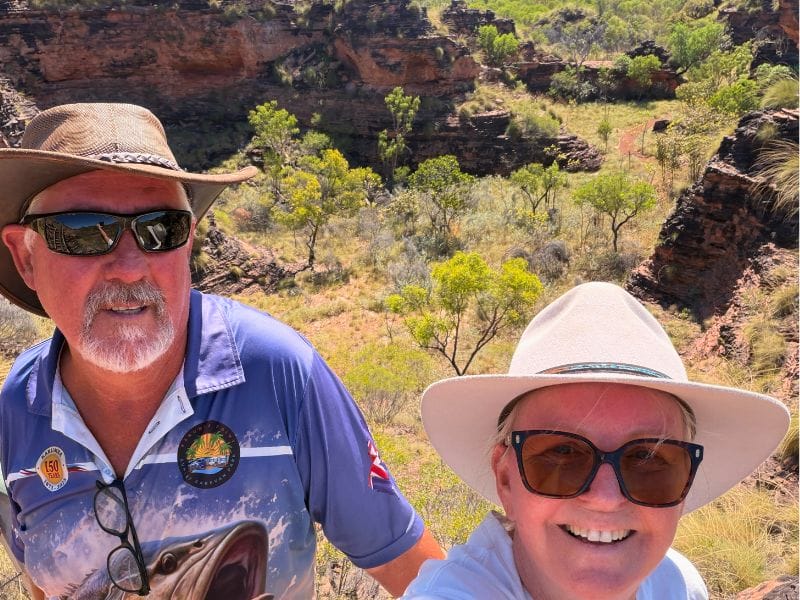
Fortunately, Kununurra has some beautiful places to explore, and one of our favourites was Mirima National Park.
Mirima is only a short distance from the centre of Kununurra, making it easy to visit without committing to a full day of driving.
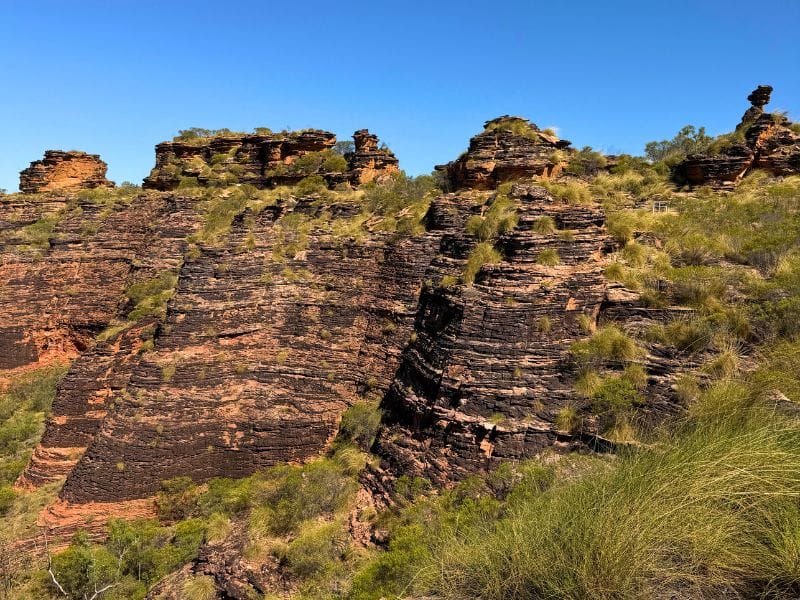
It’s sometimes called the Mini Bungle Bungles because of its striking sandstone formations, although I haven’t visited the actual Bungle Bungles myselves, so we couldn’t make a firsthand comparison.
What we can say is that Mirima was absolutely spectacular. The towering red rock formations, narrow valleys and beautiful views made it one of the highlights of our time in Kununurra.
We enjoyed it so much that we visited twice.
Our First Visit: Exploring the Easier Mirima Walks
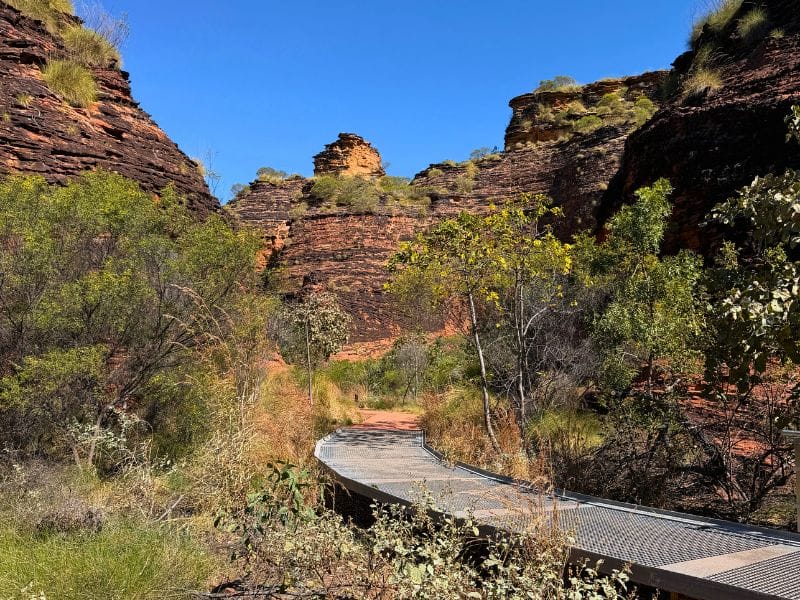
On our first visit, we stuck to the easier walking paths and spent time enjoying the scenery.
One of the lovely things about Mirima is that you don’t have to tackle its most difficult walk to appreciate the landscape.
There are shorter trails through the sandstone formations, including accessible sections and walks that lead to lookouts over Kununurra.
The rock formations are fascinating, particularly when you see how the layers and shapes change as you move through the park.
It was a welcome change from thinking about batteries, solar panels and everything else that had been going wrong with the caravan.
And we enjoyed it enough to decide we’d come back and tackle a longer walk.
Returning for the Grade 5 Mirima National Park Walk

The following day, we returned to Mirima National Park and tackled the longer loop walk, which we remember being around three kilometres.
The trail is the Yoorrnging Geranyem Banan, also known as the Painting on Rocks Trail. Official trail information lists it as a 3.5km Grade 5 loop.
Unlike the shorter walks we’d explored the previous day, this trail takes you further into the sandstone range and involves more challenging terrain.
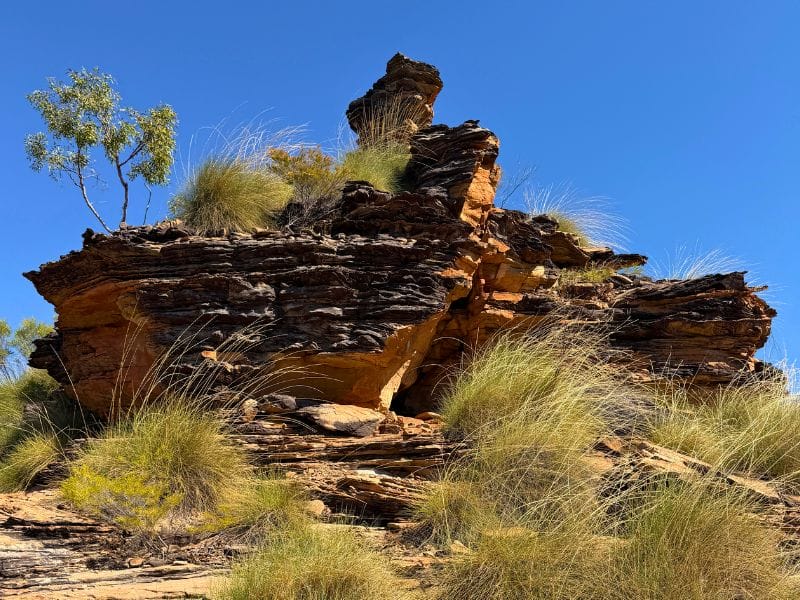
It’s a very different experience from following the easier paths near the park entrance.
We loved the scenery, and doing both types of walks gave us a much better appreciation of the park than we would have had from a single quick visit.
Mirima National Park Walking Trails
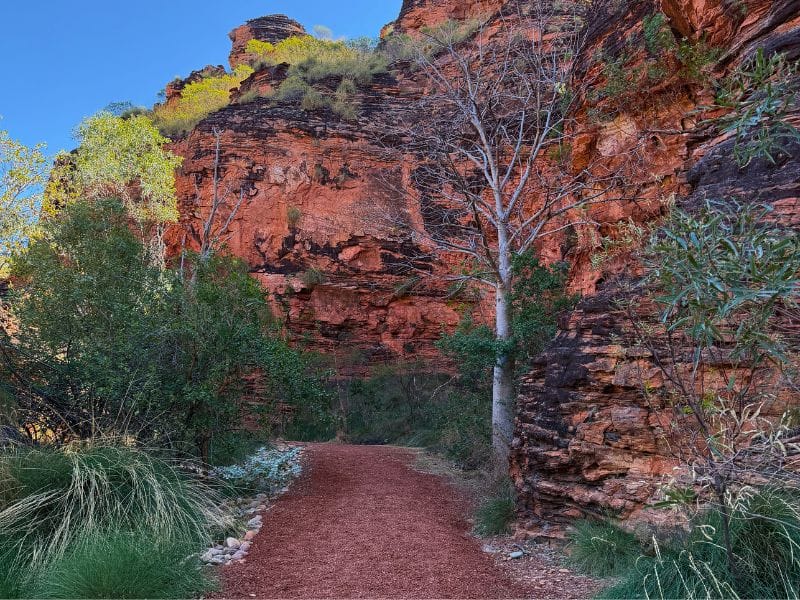
There are several walking options at Mirima, ranging from short, accessible paths to more demanding walks.
The shorter trails include the Looking at Plants walk, which has an accessible boardwalk, and the Demboong Banan Trail, which leads through a gap in the sandstone formations towards a lookout.
For those wanting a more challenging walk, the Derdbe-gerring Banan Trail climbs to elevated viewpoints, while the longer Yoorrnging Geranyem Banan loop is classified as Grade 5.
If you’re planning to visit, check the current trail information and park alerts before setting out. The Kimberley can be extremely hot, and even a relatively short walk can become demanding in those conditions.
Is Mirima National Park Worth Visiting?
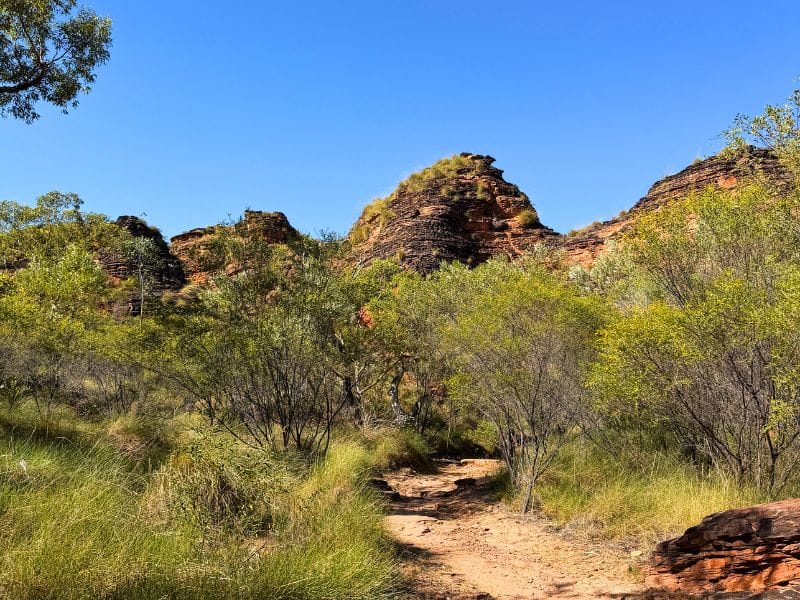
Absolutely. We thought it was spectacular, and it ended up being one of our favourite experiences in Kununurra.
What surprised us was how much there was to enjoy so close to town. You don’t need to drive for hours along a remote track to find beautiful Kimberley scenery.
We’d recommend allowing enough time to do more than one walk if you’re able to. The shorter trails are lovely, but returning for the longer loop gave us another perspective on the landscape.
For us, Mirima was also a reminder of why we love travelling around Australia. Even when things aren’t going to plan, there are still some wonderful places to discover along the way.
Watch Our Kununurra & Mirima National Park Adventure
Our sixth Gibb River Road episode follows our arrival in Kununurra, the continuing problems with our caravan’s electrical system and our visit to Mirima National Park.
You’ll see the spectacular sandstone formations and walking trails, along with our update on what the electrical inspection revealed.
If you’re considering a visit to Mirima, the video gives you a good look at the scenery and some of the walks we experienced.
Staying Longer to Work Out Our Next Move
Once we’d received the electrical inspection findings, we had another decision to make.
We’d originally planned to continue across the Tanami Track, but with the caravan’s power problems unresolved, we weren’t sure whether that was still a sensible option.
The alternative was to head through Katherine, down to Three Ways and then across towards Queensland on the sealed roads.
It would mean changing our plans again, but at least we wouldn’t be relying on the caravan’s electrical system while travelling through such remote country.
Rather than make a rushed decision, we decided to stay a few extra nights in Kununurra and really think about what we wanted to do.
By then, we’d worked out that the biggest problems seemed to occur when we stayed off-grid for more than a couple of nights. We were getting a small amount of charge while driving, and if we kept moving with mostly single-night stops, we felt we could manage the situation.
It wasn’t ideal, and we still wanted to know exactly what was wrong with the system. But we also didn’t want to abandon another part of our trip if we could reasonably make it work.
Did We Still Do the Tanami Track?
In the end, we chose the Tanami.
We knew the caravan power problems hadn’t been resolved, but we’d spent time considering our options and decided we still wanted the experience of travelling that iconic stretch of remote Australia.
After having to cut our Gibb River Road trip short, we were particularly keen not to miss out on another adventure.
Our ten nights in Kununurra had certainly been busier than we’d expected. We’d organised repairs, had the electrical system inspected, explored some beautiful places and spent quite a bit of time working out what to do next.
We hadn’t received the good news we’d hoped for about the caravan, but at least we had a plan.
And with that, it was time to prepare for the Tanami Track.

With years of experience travelling Australia in a caravan, I’m passionate about helping others embark on their own unforgettable adventures. From off-grid camping tips to expert advice on planning the ultimate big lap of Australia, I share stories, practical hacks, and inspiration to make your journey stress-free and exciting. Whether you’re a seasoned traveller or just starting out, join me as I explore the beauty of Australia, one road at a time!