
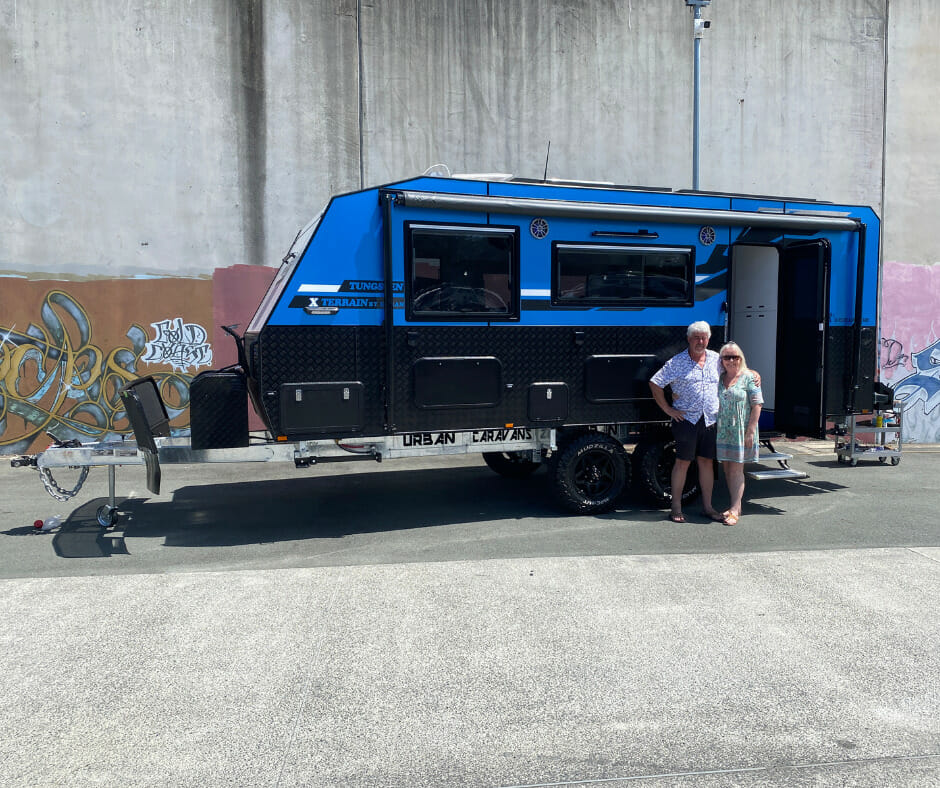
Looking for tips for picking up your new
You might have spent months researching your purchase and perhaps a few months or years waiting for it to be built and delivered. But finally, the wait is over, and your brand-new van is ready to be picked up. How exciting!
Having just gone through this ourselves, we know how much information there is to take in. It can feel very overwhelming on the day you take delivery. I wondered how we would remember everything!
This is especially true if like us, you have never owned a van before. So we hope you find our tips for picking up a new
The First Walk Around
You’ve completed all the paperwork, and the salesman is walking you around your brand-new
They are going to show you all the important things you need to know, plus a lot of little tips and tricks from experience with this van that is now yours.
Depending on the model and the extras you may have ordered, this may be a lengthy process. If you have had a van before, you may already know a lot of what he or she will talk about.
During this time, if you have any questions, it doesn’t matter how silly you think they are; you need to ask them. Kev and I asked heaps of questions on the day. If you are not sure about anything at all, ask. Paying attention now may save you some anxiety in the weeks to follow.
I videoed our hand over and we referred to it a lot after we took delivery of our van!
Outside Your Van
The van is probably all opened up, bright and airy, lights on, hatches open, and ready to show you through.
As you walk around the outside, talk about how to properly secure everything for towing, including how access doors are secured, how stabilizers are operated, and where things are stowed.
Simple things like how to put the awning out and retract it back in can save frustration later. Remember to listen well, video the instructions, take notes if you like, and ask questions.

Inside Your Van
Now we move to the inside of the
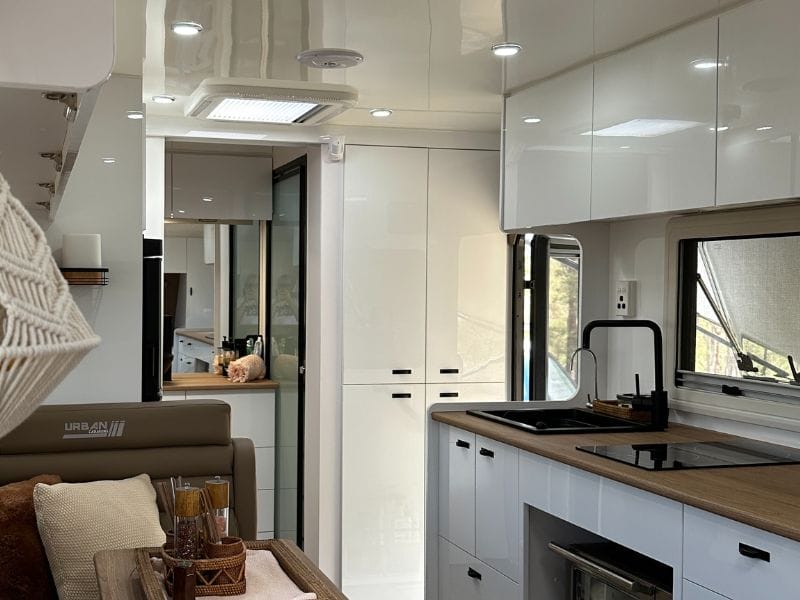
Things like how internal doors, such as the shower screen, need to be locked for travel, how the TV antennae is operated, how your fridge works, what it is running on now, and what you will run it on as you move.
You will also learn how all the drawers and cupboards lock, how windows open, close, and secure, how internal hatches are operated, and how your hot water system works.
Ask questions; nobody is going to care if you are videoing or taking notes. If you haven’t had much to do with vans before, there is alot to take in.
Time To Hook Up To Your Tow Vehicle
Move your vehicle around to the van. Hitch up and do everything necessary to safely secure your trailer to your vehicle. Now is when it gets serious.
It would be best if you started your procedures from now. I can’t emphasise enough the importance of following these procedures every time you hook up.
You will refine them as you repeat the process, but you must follow them strictly. This is YOUR procedure, for YOU and YOUR van. It will keep you, your family and other road users and your van secure.
Start from the same point every time. Look, think and ensure that both vehicles are ready to travel. Start your walk around looking for, at and not limited to:
- The coupling is secure
- Safety chains are secured, shortened enough not to drag but long enough to allow maneuverability.
- Lights plugged in and working on both vehicles
- Breakaway system hooked up if fitted
- The hand brake on the trailer is off
- Stabilizers are in the travel position
- Jockey wheel raised or stowed away
- All hatches, windows and accessories are ready for travel
- Antennae is lowered
- The entry step is folded away
- Tyres all look to be the same pressure
These are just the start and will vary with different trailers. You will get a system you are confident with, can walk through quickly and refine for your
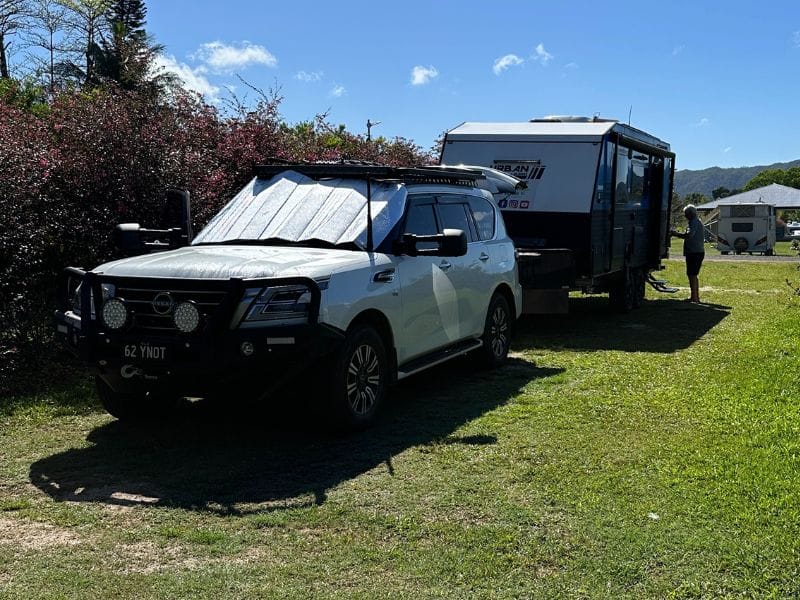
Towing Your Van For The First Time
Now the fun begins. It’s official. You’re about to drive out of the yard. Before you move away, apply the trailer brakes fully by hand with the brake controller.
Gently try to move the vehicle. If it doesn’t want to move, fantastic, the electric brakes are working. Release the brake controller, gently try to move away again. It should roll with no resistance, great, they have released properly.
You should be in the habit of doing this every time you hook up to a trailer with electric brakes. It is too late to find out they are not working in an emergency situation. You need to know before you move away.
Ok, off we go. Take it steadily for the first half hour or so. Concentrate on what you’re doing. Get the feel of it. Know where your van is sitting on the road.
Always travel to the conditions and your capabilities. You will get to know how your van “feels” while travelling.
If this feeling ever varies, it could mean something is wrong or something isn’t quite right. If you sense a change in the feel of your vehicle, pull over and do your walk around. It could save a component from completely failing.
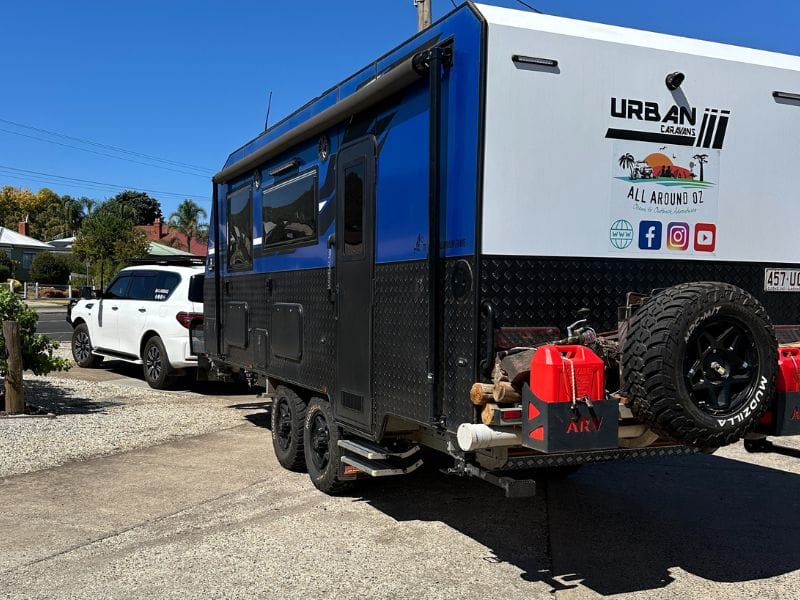
The 30 Minute Check
This is something you should do with a new van, a second-hand van, a trailer that hasn’t moved for a while, something you haven’t towed before or just for peace of mind.
After 30 minutes or shorter, if you are in heavy traffic, find somewhere safe where you can pull up with enough room to walk around your vehicle. Hop out, start from one point and do a complete loop around both vehicles, finishing back at the same point.
- You are looking for things that may have come loose, things that are open that should be closed, and making sure everything is where and how it is supposed to be.
- You are smelling for hot strange smells. Maybe the brakes are dragging a little, or the bearing is tight. Be careful and feel the wheel temperature; don’t grab them. Touch them lightly at first to think if the heat is excessive. Wheels can get very hot if a brake or bearing is dragging, which can cause a serious burn. The centres of all the wheels should be close to the same temperature.
- You are listening for anything that you think is strange, not right.
I have this habit every time we pull up somewhere. It takes 30 seconds to walk around the vehicles, and it may save some grief, time, and money later.
Know Your Weight
The TARE weight of your van will be listed on its compliance plate. This should be located in either the front boot, the tunnel boot or on the A-frame.
Remember that the TARE weight is the bare weight of your van before accessories such as solar panels and additional batteries are added or water tanks are filled.
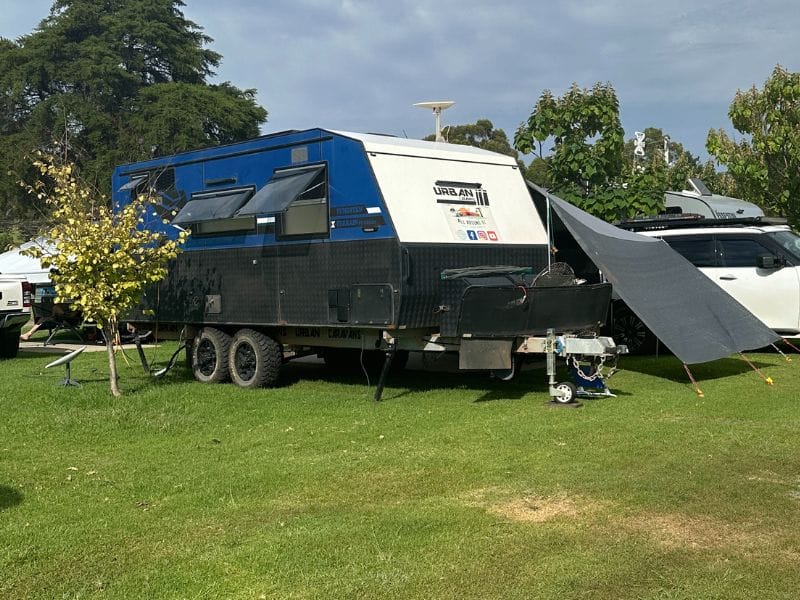
To make sure that you can legally tow your van, we recommend that at the first available opportunity, you take your van and get it weighed.
A Short Shakedown Trip
After you collect your van, a great idea is to go for a short trip somewhere. Often called a ‘shake-down’ trip, this is your chance to really get to know how everything in your van works without the pressure of travelling too far from home.
We did one long shake-down trip. I wouldn’t recommend doing this as we were learning on the go. It was just before Christmas so you can imagine the traffic!
On the trip, we free-camped to ensure the workings of our solar and battery systems. We then booked into a

Any Problems
Buying a new
Your dealer should want to carry out a routine service after your van has travelled 500 to 1000 kilometres, and this is the ideal time to address any issues.
We had some problems with our new
We hope these tips help you when it comes time for you to pick up your new van.
PIN THIS:

With years of experience travelling Australia in a caravan, I’m passionate about helping others embark on their own unforgettable adventures. From off-grid camping tips to expert advice on planning the ultimate big lap of Australia, I share stories, practical hacks, and inspiration to make your journey stress-free and exciting. Whether you’re a seasoned traveller or just starting out, join me as I explore the beauty of Australia, one road at a time!


We went to pickup our caravan yeserday.The lights on the van arent working which they are going to fix today.They said we had to get the stereo fixed under warranty as not working.They tried to fix but I think were just too much in a rush.We havent even picked this van up so can I demand they fix it?
Absolutely, they will be covered under warranty.
Thanks guys some good tips Just brought from Sydney caravan show pick up in feb I am fairly confident but all tips helpful
Cheers
Steve from Burrill Lake
You will be counting down the days until February Steve. Enjoy your new van!