
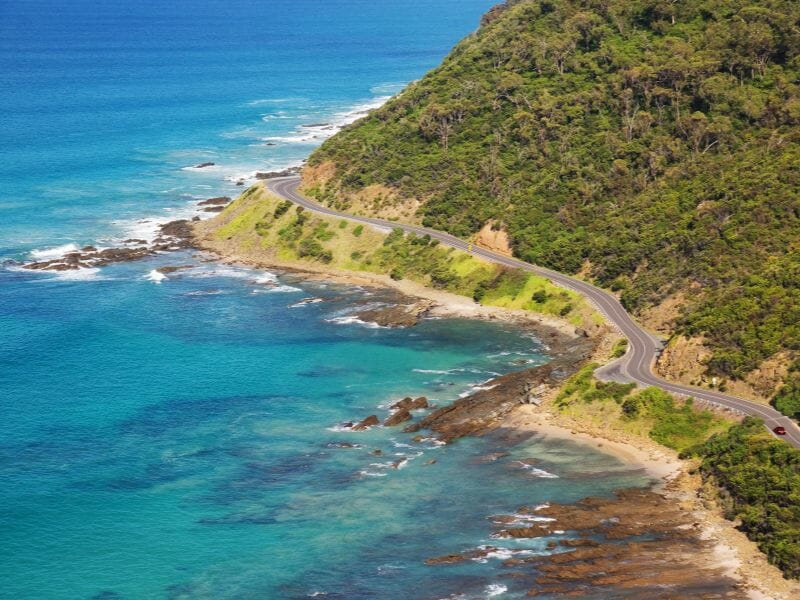
Deciding to embark on a 2 Day Great Ocean Road Itinerary is a decision we highly encourage. Speaking from experience, this section of the Victoria coastline will leave you with memories and stories that last a lifetime.
Winding its way along Australia’s rugged southeastern coast, the Great Ocean Road isn’t just a journey through breathtaking landscapes; it’s a journey through history.
Built by war heroes and standing as the world’s largest war memorial, this iconic 243-kilometre stretch is a testament to human resilience, nature’s majesty, and the enduring spirit of adventure.
From the awe-inspiring Twelve Apostles to the serene beaches of Apollo Bay, each bend in the road reveals another chapter of Australia’s rich tapestry, beckoning travellers from around the world to experience its wonders.
While the routing between various itineraries may seem similar, there are an infinite number of possibilities for a variety of experiences along the way.
Below, we’ve compiled a sample routing and some ideas to make the most of your 2-Day Great Ocean Road Itinerary.
Pack your car,
Day One Great Ocean Road Trip
- Torquay
- Bells Beach
- Split Point Lighthouse
- Great Ocean Road Sign
- Lorne
- Visit a WaterFall
- Kennett River Koala Walk
- Apollo Bay
Day Two Great Ocean Road Trip
- Cape Otway Lightstation
- Gibson Steps
- Twelve Apostles
- Loch and Gorge
- London Bridge
- Port Campbell
Day One – Torquay to Apollo Bay
You’ll want to wake up early to start Day One of your journey along the Great Ocean Road. There will be no shortage of activities and things to see and do. Trying to fit it all in will be challenging, but we believe you can do it!
Torquay is commonly considered the eastern start of a Great Ocean Road itinerary and is located approximately 100 km away from Melbourne. This makes the below itinerary perfect for the weekend adventurer and even better if you have the ability to tackle it mid-week and avoid the crowds.
Torquay

Arriving in Torquay, you will find a lovely beach town with no shortage of activities to get into. Assuming you started bright and early, swing by The Salty Dog Cafe and grab some brekkie to charge up for the day’s activities.
Depending on your interests, you might find yourself visiting the Narana Aboriginal Cultural Centre, hanging ten learning about surfing at the Australian National Surfing Museum, or going for a morning stroll along the first few kilometers of the Surf Coast Walk.
Bells Beach

Bells Beach might ring a bell due to this being one of the most famous surf beaches in all of Australia. This is where, every year around Easter, the Rip Curl’s Pro surfing competition takes place, attracting surfing royalty from all over the world.
This is one of the world’s longest-running surf competitions and is an important part of surfing’s story. Champions of this event receive trophies mounted with brass bells hanging from the mount. As the saying goes, “You’ve got to win it to ring it!”
Even non-surfers can enjoy this stop due to the idyllic natural surroundings and beautiful beach to saunter along.
Split Point Lighthouse

The Split Point Lighthouse is a must-see attraction along the Shipwreck Coast. The lighthouse is open for daily tours and provides spectacular 360 panoramas of the historic coastline. The views are truly breathtaking. What’s even cooler is that this lighthouse is still operational and continues to guide ships along this rugged piece of coastline safely.
Great Ocean Road Sign

Did you even drive the Great Ocean Road if you didn’t get a photo alongside the Great Ocean Road Sign? Make sure to pull over, visit the memorial, and snap a photo documenting your time here. The memorial here documents the returned soldiers who built this amazing stretch of roadway.
Lorne

After a busy morning of sightseeing and taking it all in, you’re likely starting to develop quite the appetite. Well, you’re in luck because coming up next is the quaint seaside city of Lorne. It’s the perfect place to make a pit stop for lunch.
Coffee shops, pubs, and eateries are abundant here, making it a popular destination for those seeking to refuel after a morning of adventure. Not feeling in any particular rush? Swing by Jebbs Pool and take a dip to cool off on a hot summer day. It’s about a 1.5km walk both ways.
Visit a Waterfall

There is no shortage of waterfalls along this scenic drive, making it incredibly difficult to choose just one to visit. You could spend your entire two days only visiting waterfalls! For this trip, we will choose two falls that are easy to get to.
Erskine Falls is a strong contender for being one of the most accessible falls along this route and also one of the tallest. Hopetoun Falls is another great option because it has a viewing platform, making it a great option for anyone with mobility issues.
Kennett River Koala Walk

Be sure to pack your binoculars because up next is the Kennett River Koala Walk. What better way to spend an afternoon than leisurely trying to spot koalas lounging in the trees?
These furry friends can be hard to spot, but it’s almost guaranteed you’ll see one if you are patient. Make sure to have that zoom lens ready, as they can be quite high up in the trees.
Pro tip: Learn to identify the eucalyptus tree, as this is where our koala friends are more than likely to be found lounging.
Apollo Bay

Plan to stay in Apollo Bay at the end of day one of your Great Ocean Road road trip. Looking out across the bay is like gazing at a moving postcard.
There is no shortage of interesting properties to stay at, including 5-star resorts, ocean-view villas, and roadside beachfront motels. It’s hard to make a wrong choice here.
Head up to Mariners Lookout and watch the sunset before going to dinner at one of the many restaurants Apollo Bay has to offer.
Day Two – Apollo Bay to Port Campbell
After a refreshing night of sleep in Apollo Bay, it’s time again to get an early morning start and begin day two of your Great Ocean Road journey. Be sure to visit one of the many cafes along the main drag before heading out of town to power up for today’s adventure.
Cape Otway Lightstation

Your first stop after leaving Apollo Bay will be at the Cape Otway Lightstation. Known as the Beacon of Hope, the Cape Otway Lightstation is the oldest lighthouse on the mainland of Australia. It’s also the southernmost point of Victoria.
In the 19th century, this was often the first sight for immigrants arriving in Australia. What a relief it must have been to see land after months at sea! Lighthouses are absolutely essential along this piece of coastline, and many a shipwreck has occurred in this area.
Twelve Apostles
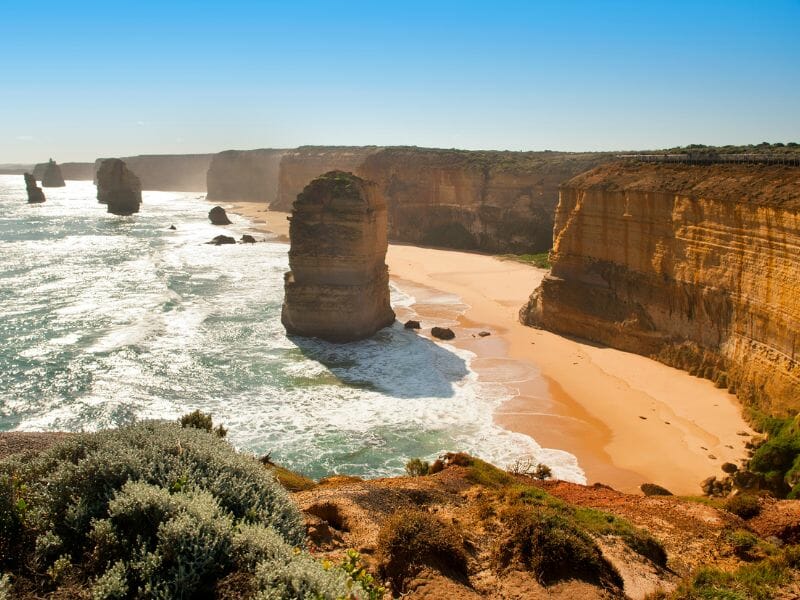
These sea stacks are instantly recognizable and have been many a catalyst for finally deciding to book a ticket and make a journey to this part of Australia’s coastline a reality.
It does not diminish their grandeur, but it’s worth mentioning that there are only 8 Apostles today. The unrelenting nature of the sea’s crashing waves has returned 4 of the Apostles to their final resting place.
Want to take things up a notch on your two-day itinerary? Consider taking a helicopter tour to get an absolutely breathtaking view of these natural wonders.
Gibson Steps

The Gibson Steps are a great way to get up close and personal with the beautiful sea stacks dotted along this piece of iconic coastline.
Visitors can descend the 86 steps to Gibson’s Beach, which offers stunning views of the high cliffs and the powerful waves of the Southern Ocean.
Local indigenous people originally constructed the steps, but the namesake comes from Hugh Gibson, who lived and worked on the land in the late 1800s.
Do note that it’s important to be mindful of the tide and weather conditions. This is a wild piece of coastline, and it’s good practice to take appropriate precautions.
Loch Ard Gorge
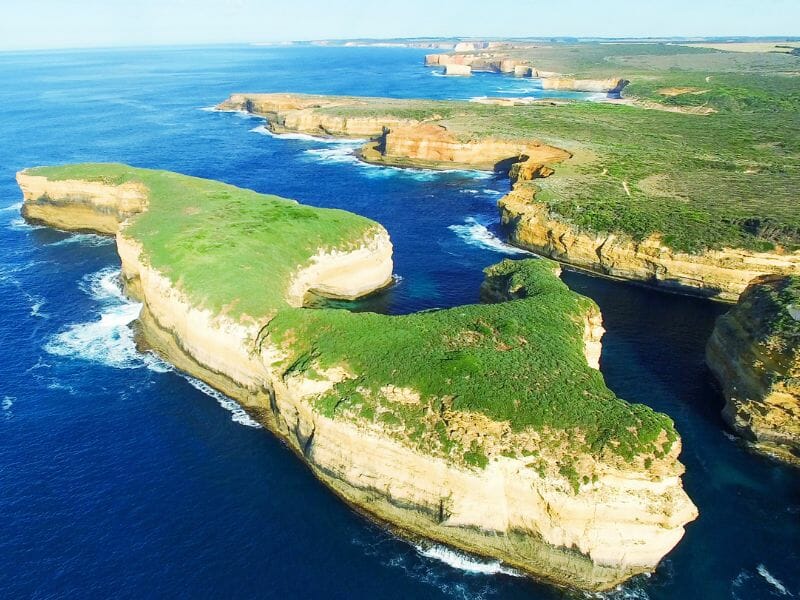
Located in Port Campbell National Park and only a few minute’s drive from the 12 Apostles, Loch Ard Gorge is the site of a famous shipwreck that occurred here in the late 19th century.
Visitors can explore the Thunder Cave, enjoy the view from the Mutton Bird Island Lookout, learn about the shipwreck, and embark on picturesque walks. The secluded beach is flanked by two stunning cliffs, making this a unique place to enjoy a beachside stroll.
London Bridge

Not far from Loch Ard Gorge is the London Bridge. This natural arch is another example of how the sea continues to sculpt this rugged coastal landscape. Until 1990, London Bridge was a double natural arch, but unfortunately, erosion and the ocean had other plans.
Viewing this natural arch at sunset is the perfect way to experience this breathtaking location, offering visitors a chance to reflect on the power and beauty of the natural world.
Also, be sure to keep your eyes open to spot the local penguin colony residents! Koala and penguin sightings in one road trip sound like the making of a fantastic outing.
Port Campbell

As your second day of road-tripping along the Great Ocean Road starts to near its end, head back to Port Campbell town after visiting the London Bridge to grab a bite to eat before making your trek home.
If you’re too wiped out to make the straight shot back to Melbourne post-dinner, consider adding a third night onto your itinerary and staying at a local accommodation.
Final Thoughts
If you have been considering a 2-Day Great Ocean Road itinerary, now is a better time than ever to make this trip a reality.
Whether you are self-driving your own vehicle, renting a car, or taking a guided tour, The Great Ocean Road generously offers a myriad of experiences that could easily fill weeks of exploration.
Feel free to modify this itinerary to suit your pace and preferences.
Whether you’re a history enthusiast, a nature lover, a beachcomber, or a photography buff, the Great Ocean Road is a mosaic of unforgettable moments and sites waiting to be discovered.
Enjoy your trip!
Pin This:


With years of experience travelling Australia in a caravan, I’m passionate about helping others embark on their own unforgettable adventures. From off-grid camping tips to expert advice on planning the ultimate big lap of Australia, I share stories, practical hacks, and inspiration to make your journey stress-free and exciting. Whether you’re a seasoned traveller or just starting out, join me as I explore the beauty of Australia, one road at a time!