There’s plenty to see around Kununurra, and while we were staying in the East Kimberley, we wanted to explore a little further afield. Lake Argyle and Ivanhoe Crossing had been on our list, along with the historic Argyle Homestead Museum.
What started as a day exploring some of the region’s best-known attractions turned into a fascinating history lesson, an impressive display of water flowing through Lake Argyle Dam and a rather memorable conversation with a fisherman.
If you’re visiting Kununurra during your Kimberley travels, these are three places worth adding to your itinerary.
Watch Our Lake Argyle & Ivanhoe Crossing Adventure
Come along as we explore the historic Argyle Homestead, visit Lake Argyle Dam and discover why there was absolutely no chance of driving across Ivanhoe Crossing during our visit.
Visiting Argyle Homestead Museum

Our first stop was the Argyle Homestead Museum, around 70 kilometres south of Kununurra, on the road to Lake Argyle.
The museum is housed in the former Argyle Downs Homestead, which belonged to the Durack family, one of the families involved in establishing the Kimberley’s early pastoral industry.
We spent time looking through the rooms inside the homestead before wandering around the grounds. It’s an interesting place to visit, particularly when you realise the building hasn’t always stood where it does today.
The Durack Family and Argyle Downs

The Durack family’s story is closely connected to the development of the East Kimberley cattle industry.
Originally from Ireland, the family established themselves in Queensland before moving cattle across northern Australia in the 1880s. The journey to the Kimberley took around two years and helped establish the pastoral industry along the Ord River.
Patrick ‘Patsy’ Durack built the stone Argyle Downs Homestead in 1894–95, following the death of his wife Mary in 1893. The building was constructed using local stone, with wide verandahs and a design that allowed air to move through the rooms, an important consideration in the Kimberley’s climate.
The family’s history is also associated with Dame Mary Durack, Patsy’s granddaughter, who documented the experiences of the early pastoral families in books including Kings in Grass Castles.
Of course, the pastoral history of the region is also part of a much longer story. The Miriuwung and Gajerrong people have longstanding connections to this country, well before the arrival of European pastoralists.
Why Was Argyle Homestead Moved?
One of the most interesting things about the museum is how it came to be in its present location.
When the Ord River Dam was constructed, the original Argyle Downs Station homestead was going to be submerged beneath the waters of the new Lake Argyle.
Rather than lose the historic building, it was carefully dismantled, with its stonework stored in Kununurra. The homestead was later reconstructed on higher ground, around 15 kilometres from its original location, and opened as a museum in 1979.
Today, the original homestead site lies beneath Lake Argyle.
It’s quite remarkable to walk through a building knowing it was taken apart and rebuilt to preserve an important part of the region’s history.
Exploring the Homestead and Grounds
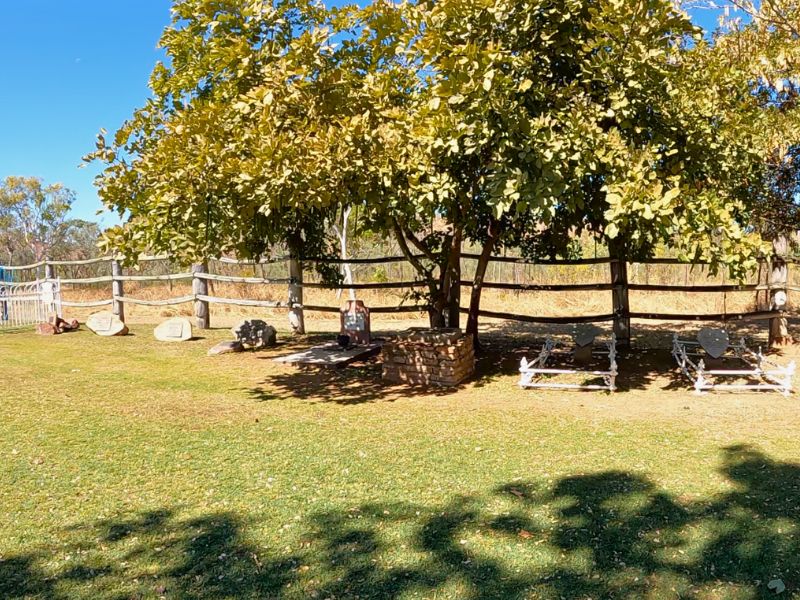
Inside, there are historical photographs, furniture and displays that help tell the story of life on Argyle Downs and the Durack family.
Outside, the gardens contain old headstones and memorials, including some that were relocated before the original station site was flooded.
We enjoyed having a look around both inside and outside the homestead. It’s worth allowing enough time to explore rather than treating it as a quick stop on the way to the dam.
The museum is generally open during the Kimberley tourist season, with an entry fee. Check current opening arrangements with the Kununurra Visitor Centre before visiting.
Lake Argyle: One Very Impressive Body of Water

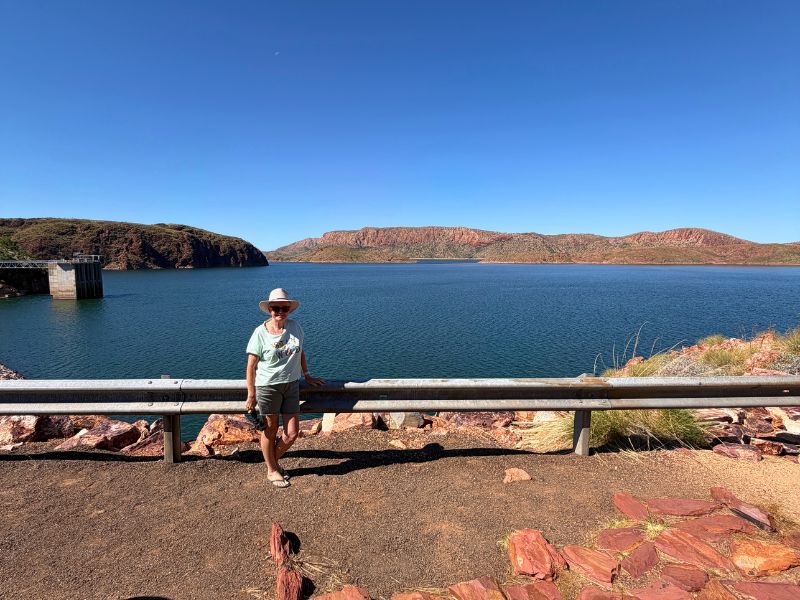
From the homestead, we continued to Lake Argyle Dam.
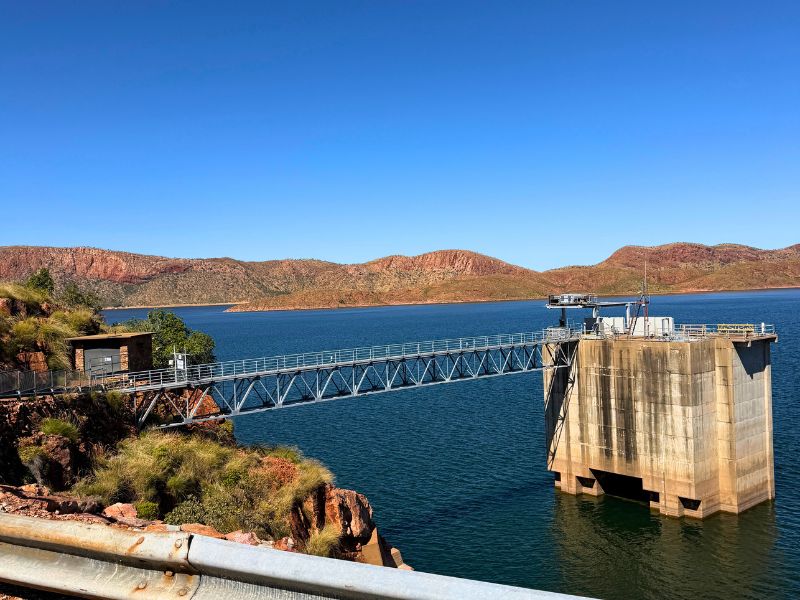
Lake Argyle is one of Australia’s largest freshwater reservoirs and forms an important part of the Ord River Irrigation Scheme. The dam was completed in 1971, creating a vast lake that transformed the surrounding landscape.
It’s difficult to appreciate just how much water is stored here until you see it for yourself.
The lake covers an enormous area, surrounded by the rugged hills of the East Kimberley. It’s a completely different landscape from the gorges and dusty tracks we’d been exploring earlier in our Kimberley travels.
Lake Argyle Dam Wall and Overflow
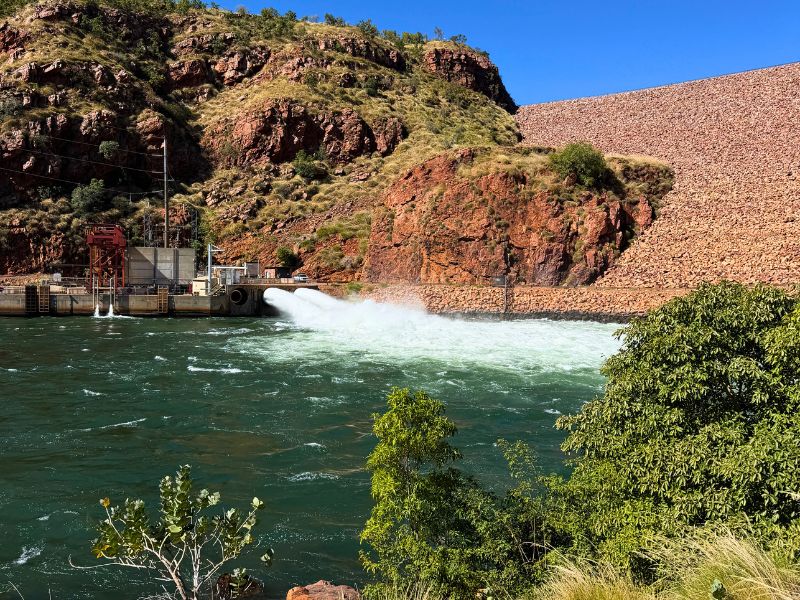
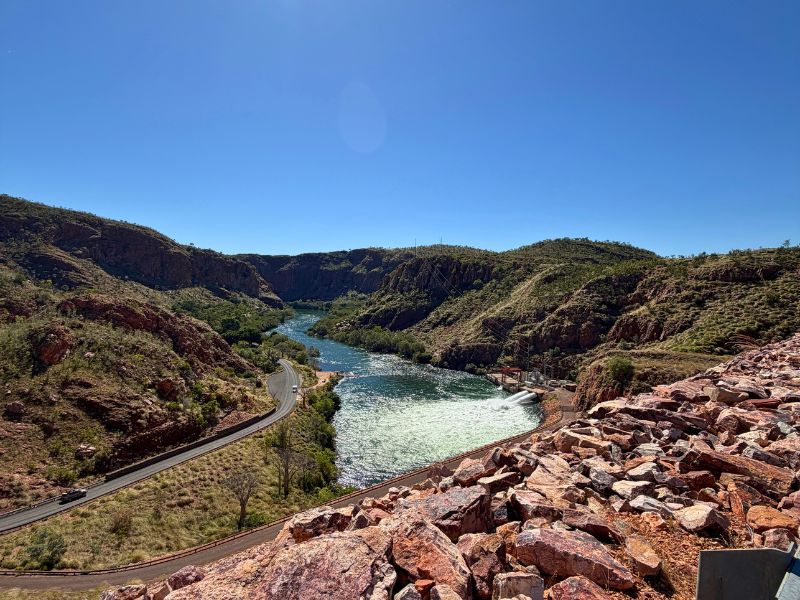
We headed out to see the dam wall and overflow, and the amount of water flowing out was something that genuinely surprised us.
The spillway allows excess water to pass safely downstream when the lake reaches the appropriate level. During our visit, the water was really moving, and it was impressive to see the volume flowing through.
Lake Argyle plays an important role in regulating water flows along the Ord River, including supplying water for irrigation around Kununurra.
Seeing the water leaving the lake also helped explain what we found later at Ivanhoe Crossing.
Lunch at Lake Argyle
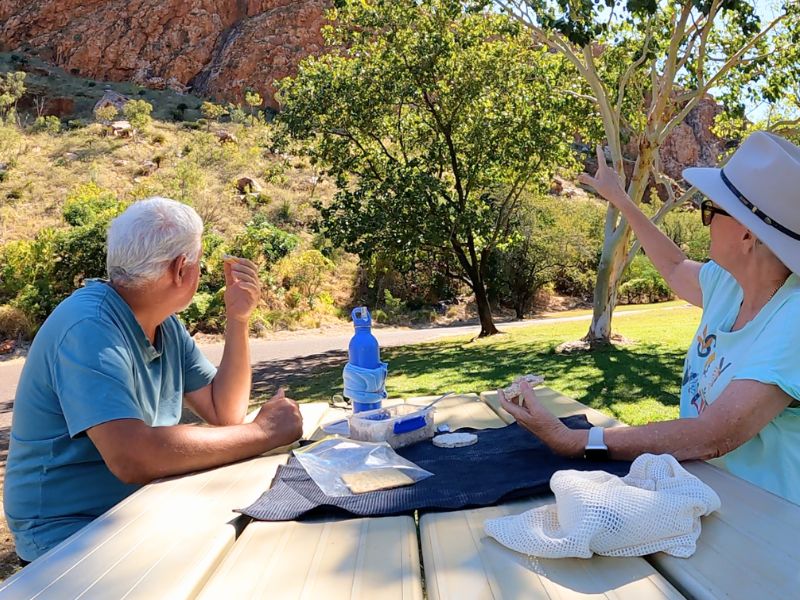
After exploring the dam area, we stopped for lunch in the picnic area.
It’s a lovely spot to take a break while exploring Lake Argyle, particularly if you’re spending the day driving out from Kununurra.
There are several ways to experience the lake, including boat cruises and scenic flights, although we were happy exploring the dam and surrounding area on this visit.
If you have more time, Lake Argyle is also somewhere you could consider staying rather than visiting on a day trip.
Ivanhoe Crossing Near Kununurra
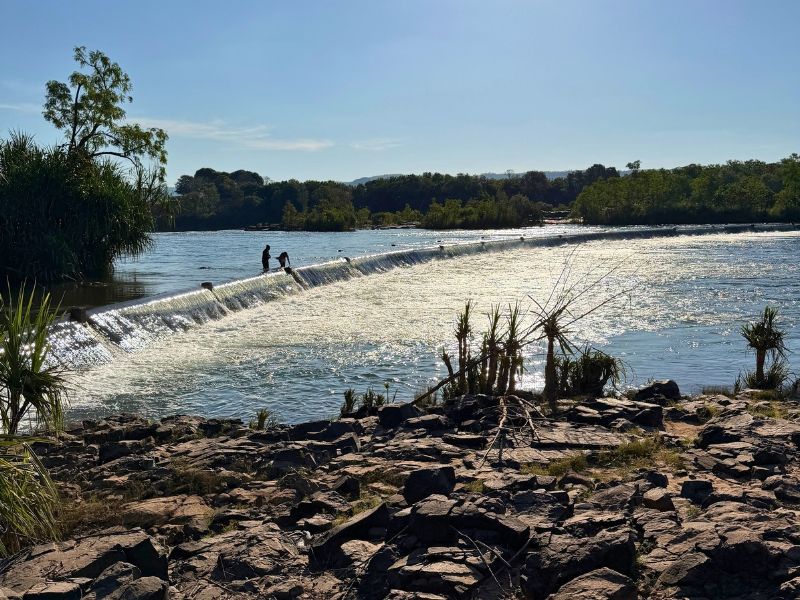
Back near Kununurra, we headed out to Ivanhoe Crossing, one of the area’s best-known river crossings.
Ivanhoe Crossing is a curved concrete causeway across the Ord River, around 10 kilometres north of Kununurra. The crossing dates back to the 1950s and was once part of the route towards Wyndham.
It’s a popular spot for visitors wanting to photograph the crossing or, when conditions allow, drive across it in a suitable 4WD.
There was absolutely no chance of that happening when we visited.
Can You Drive Across Ivanhoe Crossing?
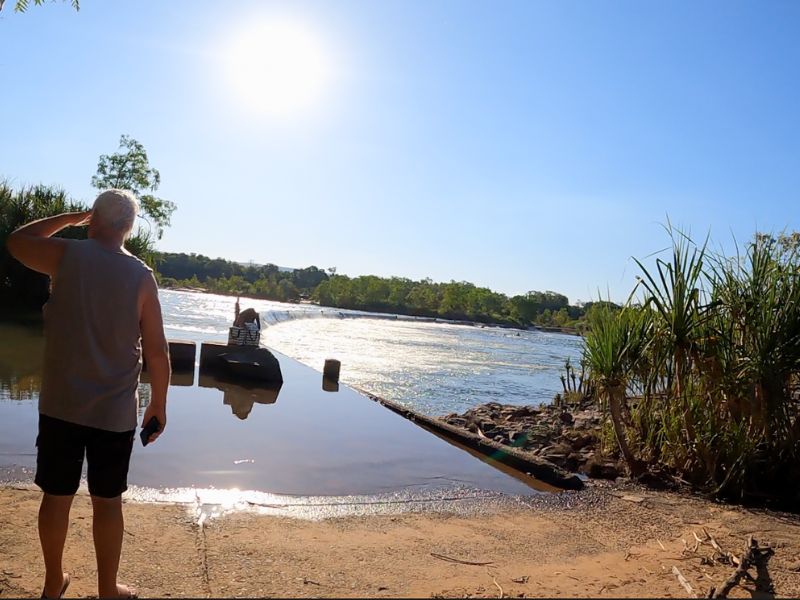
Not when we were there!
There was a huge amount of water flowing over the crossing, and large concrete barriers had been placed across the road to prevent vehicles from entering.
After seeing the water flowing out at Lake Argyle, it wasn’t difficult to understand why the Ord River was running so strongly.
The crossing isn’t always open, and conditions can change depending on water levels. Even when it is open, it’s a 4WD crossing, and you should check local advice before attempting it.
For us, it was a sightseeing stop rather than a river crossing.
Fishing at Ivanhoe Crossing, With Crocodiles Around
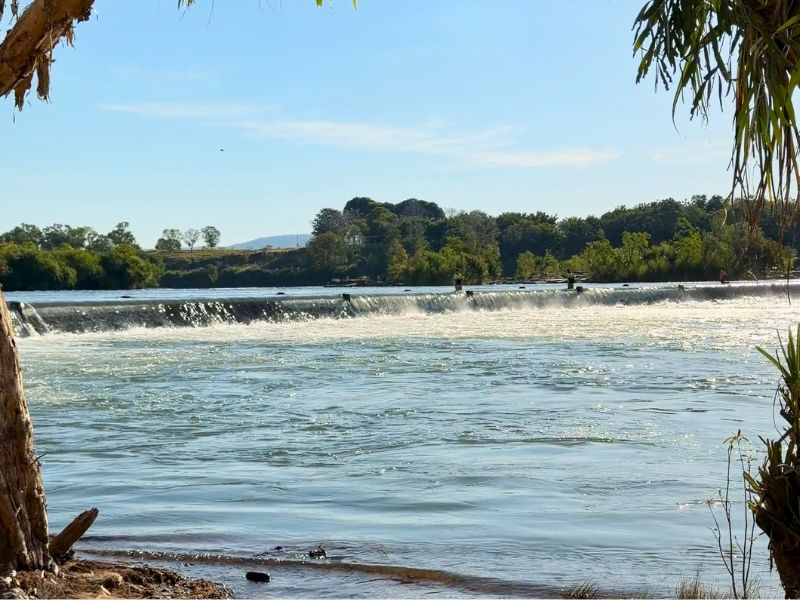
What surprised us was the number of people walking out onto the crossing to fish, despite all that water rushing past.
We didn’t see any crocodiles ourselves, but the Lower Ord River is known saltwater crocodile habitat.
I got chatting to one of the fishermen and asked whether he worried about crocodiles while fishing out there.
His answer?
He told me he liked crocodiles!
Well, that’s certainly one way of looking at it. I don’t think you’ll find me joining him out there anytime soon.
Although Ivanhoe Crossing is a popular fishing location, crocodiles and strong currents are serious hazards. It’s important to follow local safety advice and never assume the water is safe simply because other people are nearby.
Planning a Day Trip From Kununurra
Lake Argyle and Ivanhoe Crossing are both easy places to include while staying in Kununurra, although they’re in different directions.
Lake Argyle is approximately 70 kilometres south of town, while Ivanhoe Crossing is about 10 kilometres to the north. Allow plenty of time for stops, particularly if you want to explore the Argyle Homestead Museum properly.
A few things worth knowing before you go:
- Argyle Homestead Museum: Check seasonal opening times and admission prices before leaving Kununurra.
- Lake Argyle: Take your time exploring the dam area and bring lunch if you’d like to use the picnic facilities.
- Ivanhoe Crossing: Check whether the crossing is open if you’re hoping to drive across. Water levels and closures can change.
- Crocodile safety: Treat the Ord River as crocodile habitat and follow all local warning signs.
- Extra time: If you’d like to take a lake cruise or stay overnight at Lake Argyle, allow more than a day trip.
You don’t need to be towing your caravan to enjoy these stops. We explored them while based in Kununurra, which made it easy to get around without the van.
Leaving Kununurra and the Kimberley Behind
After spending time exploring Kununurra and the surrounding East Kimberley, it was finally time to move on.
We’d had an incredible time travelling the Gibb River Road and visiting places including Windjana Gorge, Bell Gorge, Manning Gorge, Wyndham and Mirima National Park.
There had also been a few challenges along the way, particularly with the caravan’s electrical system, and unfortunately those power problems weren’t entirely behind us.
Our next adventure would take us towards the Tanami Track, where we’d be swapping the Kimberley’s attractions for long stretches of remote outback driving.
But that’s a story for the next episode.
Is Lake Argyle Worth Visiting?
Yes, particularly if you’re already spending time in Kununurra.
Lake Argyle is impressive in its own right, but combining it with the Argyle Homestead Museum gives you a better understanding of how the area has changed over time.
We enjoyed learning about the history of the homestead, and the amount of water flowing through the dam was something we hadn’t expected.
Ivanhoe Crossing was another interesting stop, even though we couldn’t drive across it. We’ll have to leave that adventure for next time. And that conversation with the fisherman is one I won’t forget in a hurry!
If you’re planning a trip through the East Kimberley, I’d recommend allowing time for all three places. They’re quite different, but together they make for an interesting day exploring beyond Kununurra.

With years of experience travelling Australia in a caravan, I’m passionate about helping others embark on their own unforgettable adventures. From off-grid camping tips to expert advice on planning the ultimate big lap of Australia, I share stories, practical hacks, and inspiration to make your journey stress-free and exciting. Whether you’re a seasoned traveller or just starting out, join me as I explore the beauty of Australia, one road at a time!
- Lake Argyle and Ivanhoe Crossing: Exploring Beyond Kununurra - 11/11/2026
- Things to Do in Wyndham WA: Is It Worth Visiting? - 06/11/2026
- Mirima National Park Walks: Our Grade 5 Adventure - 26/10/2026