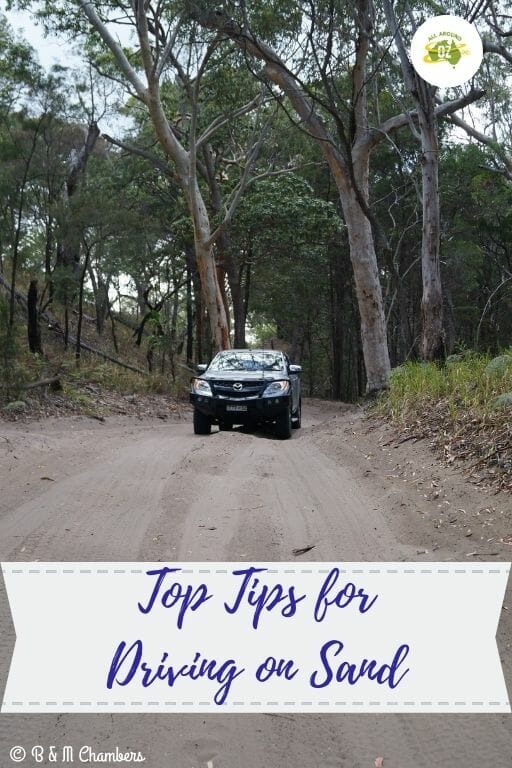
When we first bought our Mazda BT-50 we decided to head across to Fraser Island for a few days to test out its capabilities. We had previously done some beach driving at Rainbow Beach and also on the NSW North Coast but just short distances, whereas we knew that all the driving we would do on Fraser Island would be on the beach or sandy tracks. So if you are planning on driving on sand, here are a few tips that might help you out.

DRIVING ON SAND
Firstly, you needed to make sure you have the right equipment to ensure that if you do become stuck somewhere, you can get yourself out again.
When you hit the sand for the first time, especially if it is soft, you need to maintain your momentum. Driving to slowly or stopping altogether will almost guarantee that you will become stuck. In fact, we saw several vehicles stuck in the sand whilst we were on Fraser Island. One guy didn’t even make it onto the ferry!

TYRE PRESSURE
The most important thing to remember when driving on sand is that you must reduce your tyre pressure. A lower tyre pressure will give you better traction in soft sand and stop you digging into it. Most people recommend you drop your tyre pressure by at least 15 to 20 PSI. If you find that you are loosing momentum, you can drop them lower. Be careful not to drop them to low as this can cause the bead to break and the tyre to go flat.

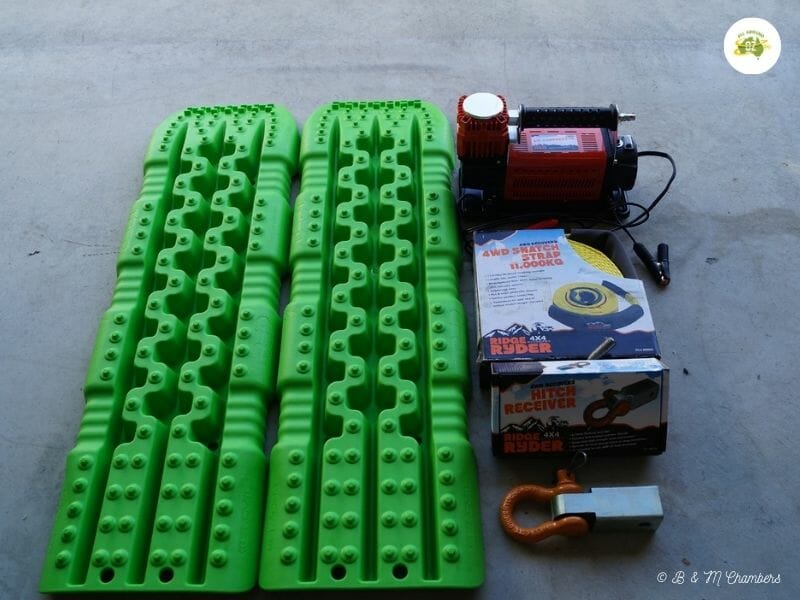
Once you return to harder sand or bitumen you will need to re-inflate your tyres so a good quality air compressor that runs off the battery is an essential item. We purchased a 150PSI air compressor. It is a nice compact unit and comes with a carry bag so all the attachments are in one spot. Don’t forget to include a good quality tyre pressure gauge into your kit.

RECOVERY GEAR
Next on the list was a set of Recovery Tracks. These are hard, moulded plastic with grooves and ripples in them that you can place at the rear of your wheels to help you get out of sand or mud bogs. These also came with a carry bag so you don’t end up with mud or sand all through your vehicle should you need to use them.
A shovel will also come in handy, in case you need to dig yourself out of somewhere. It might also come in handy if you need to make a bush toilet stop!
Another essential item to add to your kit is a snatch or recovery strap. If you don’t have a winch, a strap can still be used to tow a vehicle from a bog.
FIRST AID
No matter where you are travelling to, a first aid kit is a must. The more remote the area you intend on travelling to, the more comprehensive your first aid kit will need to be. This post on Basic Safety Gear will give you some ideas to start your kit off. Make sure before you head off on any trip that your First Aid Kit is properly stocked. Also, check for any items that may have expired and replace those items.
PIN THIS:

Listen in to their podcast episode https://allaroundoz.com.au/podcasts/travelling-and-working-around-australia/