What It’s Really Like Travelling Australia With Kids: Lessons From 8 Feet Travels
What It’s Really Like Travelling Australia With Kids: Lessons From 8 Feet Travels
Travelling Australia as a family sounds pretty dreamy from the outside. The beaches, the campfires, the kids riding bikes with new mates, the freedom to choose where you wake up next.
And yes, there is plenty of that.
But as Jessie and Adam from 8 Feet Travels shared on this week’s episode of Big Lap Chats, the first few weeks on the road can also feel like complete chaos.
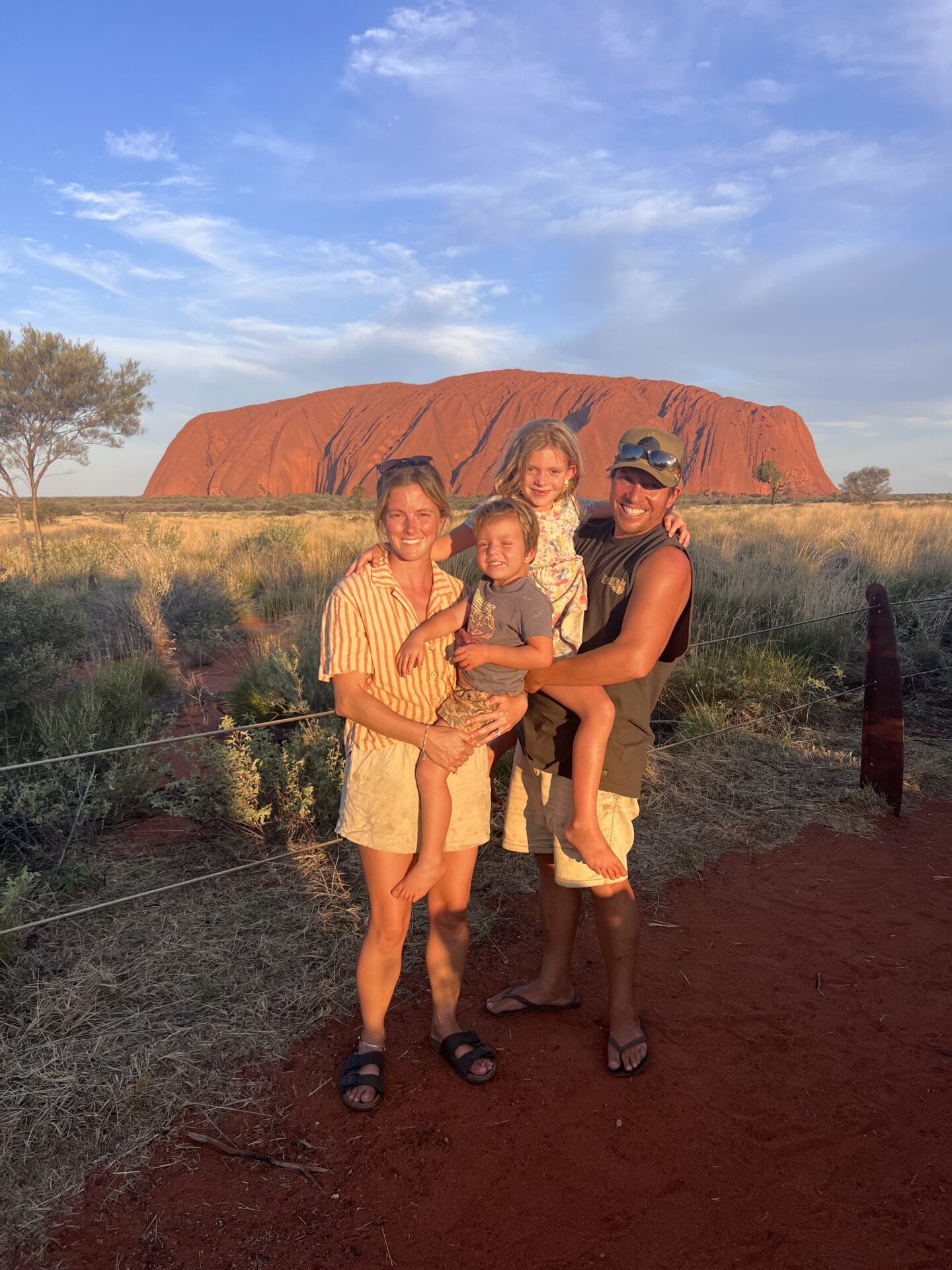
After selling their home in Perth, packing up their life and heading off with their kids, dog, Nissan Y62 Patrol and Wonderland caravan, Jessie and Adam have now been travelling Australia for just over two years. What started as a planned 12-month big lap of Australia, has turned into something much bigger, with work opportunities, caravan shows, remote work and a few clever adjustments helping them keep going.
But like most families who hit the road, the beginning wasn’t all smooth sailing.
The first six weeks can be rough
One of the most honest parts of our chat was when Adam described the early adjustment period.
He said the first six weeks can feel like “hell”, especially for families. Not because travelling Australia is a bad decision, but because everyone is trying to learn a completely new way of living at the same time.
At home, life usually has structure. Parents have work routines. Kids have school hours. Everyone has their own room, their own space and their own way of winding down.
Then suddenly you throw that out the window and move into a caravan.
The kids no longer have a bedroom to disappear into. Their toys are in a box on the bunk. Mum and Dad are together almost 24/7. The whole family is learning how to live, sleep, eat, travel, school and relax in one very small space.
That is a huge adjustment, and I think it’s something more families need to hear before they leave.
It doesn’t mean you’ve made the wrong decision. It doesn’t mean your kids aren’t suited to travel. It doesn’t mean you’re failing.
It means everyone is adjusting.
You need to learn how to give each other space
Jessie and Adam spoke about how important it became to find moments of space, even when living in a caravan.
That might mean one person going for a walk, taking the kids to the playground, doing a job outside the van, or simply giving each other a bit of breathing room.
When you’re travelling full-time, you are not just going on holiday together. You are living together in a confined space, often while navigating new towns, weather, breakdowns, schoolwork, tired kids, shopping, fuel costs and decision fatigue.
It makes sense that everyone gets a bit scratchy at times.
The trick is learning how to recognise it before it turns into a blow-up. Sometimes that means letting things go. Sometimes it means not poking the bear. Sometimes it means admitting that you need ten minutes alone before you can be a reasonable human again.
That is real family travel.
A practice trip helps, but it won’t prepare you for everything
Before they left properly, Jessie and Adam had done a shorter trip around WA. That trial run helped them realise they wanted to travel for longer, and it also gave them a taste of what life on the road could look like.
But even with that experience, full-time travel was still a big shift.
That is worth remembering if you’re planning your own lap. A shakedown trip is a brilliant idea, but it won’t reveal everything. You might work out what needs changing in your setup, what you forgot to pack, or whether your tow vehicle feels right. But the emotional side of full-time travel often only shows up once you are actually living it.
You can prepare the van, plan the route and pack the gear, but your family will still need time to settle into the rhythm.
Practise reversing before you leave
When I asked Jessie and Adam what they would encourage people to rehearse before heading off, reversing came up straight away.
And honestly, I agree.
Reversing a caravan can be stressful enough without an audience, tired kids, a tight caravan park site and someone standing behind the van yelling instructions you can’t hear properly.
Jessie and Adam said they started out using their voices, then moved to walkie-talkies, and over time worked out a communication system that suited them.
This is one of those things that sounds small until you’re in the middle of it. Practising before you leave can save a lot of tension later.
Find an empty car park or a quiet space and practise backing into imaginary sites. Work out what words you’ll use. Decide whether hand signals, radios or phone calls work best. The goal is not to become perfect. The goal is to avoid turning every reversing moment into a public marital performance.
If you’re new to towing, do a towing course
Adam also made a really good point about towing.
A lot of people are jumping straight into caravanning without much experience towing, and some are heading off with large vans behind them. If you’ve never towed before, or you’re not confident, a towing course is money well spent.
It’s not just about reversing. It’s about understanding how your setup feels on the road, how to handle hills, trucks, dirt shoulders, braking distances and unexpected moments.
Jessie and Adam have had situations where a truck has come across towards them and they’ve had to move onto the dirt. Those are the moments where experience matters.
You don’t want your first real lesson in towing to happen at highway speed with a caravan behind you.
Spend a few nights in the van before you leave
Another practical tip they shared was to sleep in the caravan before you officially leave. This is especially helpful if you have kids.
Let them get used to the bunks, the smaller space, the sounds, the night-time routine and where their things live. It gives everyone a chance to adjust before you add long drives, unfamiliar towns and travel fatigue into the mix.
Even if the van is parked in your driveway, it still helps.
You’ll quickly work out who needs what beside the bed, whether the kids are too hot or cold, where the shoes pile up, what you forgot to pack and whether your morning routine actually works.
Kids can thrive on the road
Even though the early weeks were hard, Jessie and Adam also spoke about the good side of travelling with kids.
Their kids have made friends all over Australia. They’ve spent hours outside, riding bikes, playing at caravan parks, exploring new places and learning through experience.
They are enrolled in distance education, with regular teacher contact and workbooks, but they are also learning skills that are hard to teach in a normal classroom.
Adaptability. Confidence. Making new friends. Saying goodbye. Understanding distance. Seeing different landscapes. Learning how to live with less.
Jessie and Adam also spoke about how travelling kids often reconnect with the same families along the road. You might meet a family at one caravan park, then bump into them again a few towns later. Before long, the kids remember each other better than the adults do.
That travelling community becomes a big part of the experience.
The travelling community looks after its own
One of the stories that stood out was from their earlier WA trip, when their son became very unwell in Tom Price.
It was a frightening situation, and they were a long way from a major hospital. But what stayed with them was how quickly other travellers offered support. Families they barely knew offered to help with their daughter and dog so they could focus on their son.
That is one of the things I love about this lifestyle.
You can be a long way from your usual support network, but you’re often surrounded by people who understand exactly what it’s like to be travelling with kids, pets, vans, breakdowns and all the unknowns.
People help each other.
Remote travel needs a different level of preparation
Jessie and Adam have done the Gibb River Road and are preparing for Cape York, so we also spoke about how they plan for remote trips.
For a normal week on the road, they don’t do a huge amount of meal planning. They shop, cook fairly simply and make it work.
But for places like the Gibb or Cape York, it’s a different story.
They plan properly, vacuum seal meat, think carefully about fridge and freezer space, and avoid relying too heavily on fresh fruit and vegetables that may not last in heat or corrugated conditions.
One lesson from the Gibb was that fresh produce can go off much faster than expected. For future remote trips, they are leaning more on frozen fruit and vegetables so they waste less and have more reliable food on hand.
They also talked about the importance of doing big shops before expensive remote areas, especially in parts of WA where groceries can become very pricey.
The gear they won’t travel without
When I asked what gear they now wouldn’t do without, Jessie said the washing machine gets a serious workout.
For a travelling family, that makes sense. Kids, dirt, beach days, playgrounds, food spills and remote travel all add up quickly.
Adam’s pick was a jump starter.
He said it has helped them and other people on the road, particularly in remote areas where a flat battery can become a much bigger problem. It doesn’t take up much space, but it can get you moving again or at least help you reach the nearest town.
That is the kind of practical gear that earns its place in the setup.
The best advice is often still word of mouth
We also spoke about how they find great places on the road.
Apps, Facebook groups, Instagram and YouTube all have their place, but Jessie and Adam still rate word of mouth as one of the best sources of information.
Talking to other Lappers, locals, caravan park neighbours and visitor centres can give you current, practical information that an app might not.
Road conditions change. Access changes. Weather changes. Someone’s review from six months ago may not be relevant by the time you arrive.
That is where a conversation can save you a lot of hassle.
Want the campsite details? Listen to the full episode
Jessie and Adam did share some of their favourite places around Australia, including a few cracking low-cost and free camping spots.
If you love hearing where other Lappers have stayed, what they’d go back to, and which places really stood out after two years on the road, make sure you listen to or watch the full Big Lap Chats episode with 8 Feet Travels.
You’ll also hear more about their Gibb River Road experience, their Cape York prep, travelling with a dog, working on the road, caravan shows, brand partnerships and how a planned 12-month lap turned into a much longer adventure.
Final thoughts
What I loved about this conversation with Jessie and Adam is that they didn’t sugar-coat family travel.
Yes, it can be incredible. Yes, the kids can thrive. Yes, you can make lifelong memories and build a completely different kind of life.
But the beginning can also be hard. You’re adjusting to less space, less routine, more togetherness and a completely different way of making decisions.
That doesn’t mean you shouldn’t go. It means you should go in with your eyes open.
Practise the practical stuff. Give everyone time to settle. Expect the first few weeks to feel messy. Don’t compare your setup to someone else’s. And remember that most families who look like they have it all sorted probably had their own chaotic start too.
Listen to the full episode of Big Lap Chats with Jessie and Adam from 8 Feet Travels to hear the full conversation.
https://youtu.be/Sno_6p7SUGI
Jessy and Adam
8 Feet Travels
Prior to the lap, Adam was in the Royal Australian Navy for over 13 years with multiple deployments overseas and really did miss those younger years of Charlotte.
Adam started FIFO in the Pilbara, Jessy went on maternity leave with Noah and we made a quick decision to grab our first van from a Caravan and Camping Show and travel the north west of WA for 4 months.
Jessy and I already loved travelling, we have travelled all over the world together.
We got home, Adam back to FIFO, Jessy working in the city, kids in school – we had to make a change. Fast track 4 years of saving, completing a renovation on the ‘home’, we sold up, Jessy was offered to work remotely part-time and we headed north.
Right now with just over 2 years on the road, Jessy and I are closer than ever and we get to really witness Charlotte and Noah grow in front of our eyes.
As an Amazon Affiliate we earn from qualifying purchases
All Around Oz acknowledges the Australian Aboriginal and Torres Strait Islander peoples as the first inhabitants of the nation and the traditional custodians of the lands where we live, learn and work. {SOURCE}